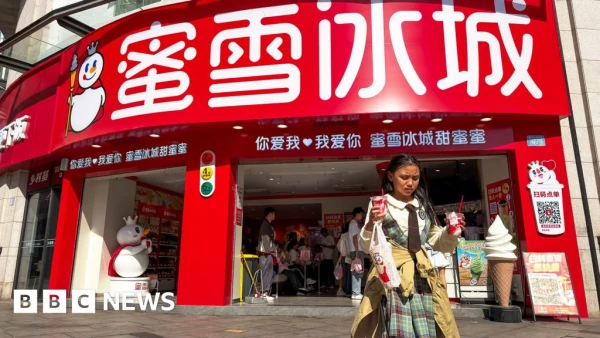
From bustling Singapore malls to the streets of London and Los Angeles, a new wave of Chinese consumer brands is making its mark globally. Companies like bubble tea chains Chagee and Mixue, hotpot giant Haidilao, and sportswear leader Anta are transforming international markets, moving China's economic narrative beyond its traditional role as the world's factory.
"China has moved beyond a replication economy," observes Tim Parkinson of consultancy Storytellers China. "Its products now meet the expectations of a new generation of demanding global consumers."
This shift represents a fundamental evolution in China's economic strategy. Having mastered manufacturing for Western companies for decades, Chinese firms have absorbed crucial knowledge about branding, distribution, and large-scale retail operations. This expertise now fuels their global expansion.
Mixue, an ice cream and bubble tea chain, now operates more outlets worldwide than McDonald's and Starbucks combined. Meanwhile, Anta has grown into the world's third-largest sportswear brand through strategic acquisitions of international names like Salomon and Wilson, alongside a significant stake in Puma.
South East Asia has served as a crucial testing ground for many Chinese companies before they venture into Western markets. With over 650 million young, increasingly affluent consumers, the region offers both scale and competitive pressure that helps refine business models.
Haidilao's international journey exemplifies this approach. Since opening its first overseas outlet in Singapore in 2012, the hotpot chain has expanded to 1,300 restaurants across 14 countries.
"Haidilao's story reflects China's 30 years of economic transformation and internationalization," says Zhou Zhaocheng, vice president of Haidilao International. The company now pursues halal certification in Indonesia and Malaysia, potentially opening doors to Muslim-majority markets across the Middle East.
Beyond food and beverage, Chinese brands are making waves in diverse sectors. Pop Mart's Labubu figurines became a global phenomenon primarily through social media rather than traditional advertising, with US sales growing 900% since 2024. Miniso, selling licensed toys and merchandise, now operates in more than half the world's countries.
This outward expansion, known as "chuhai" or "going out to sea," is increasingly driven by domestic pressures. A slowing Chinese economy, intense local competition, and changing consumer habits have pushed companies to seek growth opportunities abroad.
Even established foreign brands are feeling the impact. Starbucks' market share in China has more than halved since 2019, while local competitor Luckin Coffee now operates nearly four times as many stores in the country. Luckin's mobile-first, cost-efficient model has proven particularly effective in China's competitive market.
The electric vehicle sector demonstrates similar momentum. BYD has overtaken Tesla as the world's largest EV manufacturer, benefiting from early technology bets and China's vast domestic market. The company now develops ultra-fast charging systems that add hundreds of kilometers of range in minutes, building an entire ecosystem around its vehicles.
Market research indicates strong continued expansion, with over 70% of Chinese firms operating in South East Asia planning further growth. As these brands refine their international strategies through localization and cultural adaptation, they're redefining what "Made in China" means to consumers worldwide.