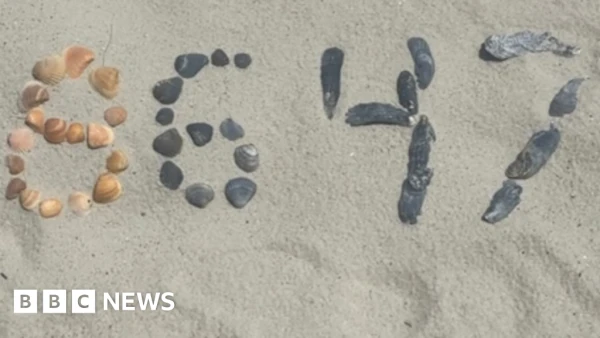
James Comey, the former FBI director, has been indicted for a social media post showing seashells arranged to form the numbers "86 47" — a gesture the Department of Justice interprets as a threat against President Donald Trump. However, many legal experts are skeptical that the government can secure a conviction, citing free speech protections and the ambiguity of the message.
The indictment, handed down this week, charges Comey with threatening the life of the president and digitally transmitting that threat. The case stems from an Instagram post in which Comey shared a photo of seashells on a beach arranged as "86 47," a reference that prosecutors say implies removal or harm to Trump, whose election number is 47. Comey deleted the post shortly after and claimed he did not realize the numbers could be seen as violent.
"It's a very weak indictment, and it doesn't seem to me that it's a chargeable case," said Evan Gotlob, a former federal prosecutor. He predicted the charges would likely be dismissed.
Legal analysts point out that to convict, prosecutors must prove Comey intended a "true threat" — a serious expression of intent to commit unlawful violence. They must also show he acted recklessly. Because "86" has multiple meanings, including simply to eject or remove, and Comey has denied any malicious intent, many doubt a jury could unanimously find him guilty beyond a reasonable doubt.
Acting Attorney General Todd Blanche defended the charges, stating, "You cannot threaten the president of the United States," and denied any political motivation. FBI Director Kash Patel noted the investigation spanned nearly a year and involved a grand jury vote.
Yet even conservative legal scholar Jonathan Turley, a frequent Trump supporter, called the indictment "facially unconstitutional" under the First Amendment. "I would prefer to crawl into one of Comey's conversant shells than write a column supporting him," Turley wrote, "but here we are."
The case mirrors a previous set of charges against Comey that were dismissed last year. His legal team is expected to again argue "vindictive prosecution."