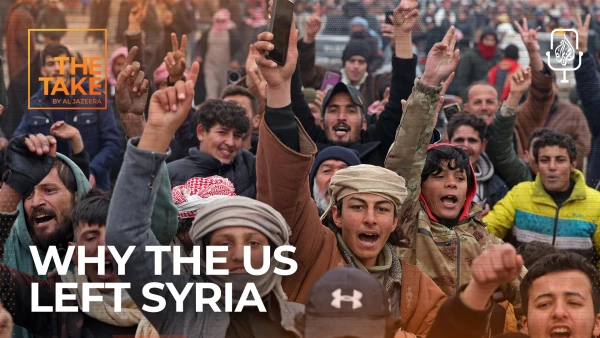
After a ten-year military presence, the United States has completed its withdrawal from Syria, marking a pivotal moment that will reshape regional dynamics and leave Kurdish forces facing an uncertain future.
The departure signals a significant shift in American foreign policy in the Middle East, creating a power vacuum that neighboring countries and local factions are poised to fill. This move comes amid escalating regional tensions and raises critical questions about Syria's political trajectory and security landscape.
"The withdrawal fundamentally alters the balance of power in northeastern Syria," explained regional analyst Dr. Leila Hassan. "Kurdish forces who partnered with the U.S. against ISIS now find themselves strategically vulnerable without American military backing."
Kurdish-led Syrian Democratic Forces (SDF), who played a crucial role in defeating the Islamic State with U.S. support, now confront complex challenges. They must navigate increased pressure from Turkish military operations along the border while managing delicate relations with the Syrian government in Damascus.
The geopolitical implications extend beyond Syria's borders, potentially affecting relations between Turkey, Russia, Iran, and various Arab states. Regional powers are already positioning themselves to influence Syria's future, with Russia expanding its military presence and Turkey seeking to establish buffer zones.
Humanitarian organizations warn that the withdrawal could destabilize areas previously secured by U.S. and Kurdish forces, potentially creating conditions for extremist groups to regroup. Meanwhile, Syria's protracted civil war continues, with millions displaced and the country's infrastructure devastated after years of conflict.
This strategic realignment represents one of the most significant developments in Middle Eastern geopolitics in recent years, with consequences that will likely unfold for months and years to come as various actors jockey for influence in post-withdrawal Syria.