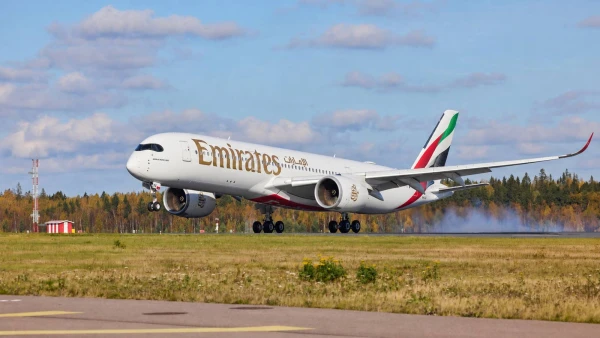
Emirates has dramatically scaled back its Airbus A350 operations, removing the twinjet from 14 routes originating in Dubai as the airline adjusts to fluctuating demand and geopolitical challenges. The cuts, which span destinations across Europe, Africa, and North America, reflect a strategic pivot to more flexible aircraft types amid ongoing regional instability.
The airline’s decision to downsize its A350 fleet comes after a period of reduced travel confidence, particularly in the Gulf region, where the ongoing conflict in Iran has dampened visitor numbers. Emirates, which operates 31 A350-900 aircraft, had deployed the fuel-efficient twinjet on routes ranging from Glasgow to Cairo, but now plans to replace it with larger Boeing 777 variants on most of these services.
A Route-by-Route Breakdown of the Cuts
Analysis of Cirium Diio data reveals that Emirates operated the A350 on 11 routes between January and October 2026, but has since removed it from all but three destinations. The most significant reductions include:
- Newcastle, UK: The A350 was deployed 206 times between March and October, but Emirates has reverted to its Boeing 777-300ER, citing a 67% drop in passenger numbers in April compared to the previous year. Capacity cuts of up to 48% failed to match the steep decline in demand, though figures improved slightly by September.
- Dublin and Frankfurt: Both European hubs saw the A350 removed after heavy usage earlier in the year. Dublin, in particular, logged 156 A350 departures from June to October, but the type will no longer operate there.
- Athens: The Greek capital saw 107 A350 flights between July and October, but the specific services have been suspended entirely. When they resume in 2027, Emirates plans to use its Boeing 777-200LR instead.
Other routes affected include Boston, Dar es Salaam, Glasgow, Perth, Venice, Manchester, Medina, Brussels, and Milan Malpensa. In most cases, the Boeing 777-300ER will take over, though Manchester briefly saw the Airbus A380 replace the A350 before that aircraft was also phased out.
Why the Shift?
The A350’s lower capacity—offering either 298 or 312 seats depending on configuration—was initially seen as an advantage for matching supply to demand. However, the ongoing war in Iran and broader economic uncertainties have forced Emirates to prioritize larger aircraft that can absorb sudden drops in passenger numbers without sacrificing profitability.
"The A350 was a great tool for right-sizing capacity, but the market conditions have changed," said an industry analyst familiar with Emirates’ strategy. "With demand still volatile in key regions, the flexibility of the 777-300ER makes more sense for now."
The airline has not ruled out reintroducing the A350 on these routes in the future, particularly as travel confidence stabilizes. For now, however, the cuts underscore the delicate balance airlines must strike between efficiency and adaptability in an unpredictable global landscape.