In an era where aviation technology is evolving at breakneck speed, 2026’s most advanced aircraft are redefining what it means to fly. Gone are the days when pilots relied solely on manual controls and paper charts. Today’s cutting-edge flight decks are designed to act as partners, enhancing situational awareness, reducing fatigue, and even anticipating the pilot’s needs. From private jets to commercial airliners and fighter planes, these five aircraft stand at the forefront of this revolution, blending automation, aerodynamics, and ergonomics into seamless flying experiences.
The Gulfstream G700: Where Private Aviation Meets Airliner Precision
Pilots of the Gulfstream G700 are raving about its Symmetry Flight Deck, a cockpit that bridges the gap between business jets and commercial airliners. The system features linked sidesticks with tactile feedback, ensuring both pilot and copilot receive synchronized inputs. Ten touchscreen displays dominate the instrument panel, while dual heads-up displays (HUDs) merge infrared camera footage with synthetic 3D terrain maps, offering unparalleled visibility in any condition.
What truly sets the G700 apart is its autopilot-linked sidesticks, which move autonomously when the system is engaged, providing a visual and physical cue of the computer’s control. The cabin’s pressurization system maintains an altitude equivalent to just 2,840 feet—even as the jet cruises at 51,000 feet—ensuring pilots arrive sharper and more alert. Fresh, sterilized air circulates every two to three minutes, eliminating the stale environment of traditional cabins.
The Airbus A380: The Paperless Pioneer That Changed Aviation Forever
When the Airbus A380 debuted, it wasn’t just a marvel of engineering—it was a digital revolution in the sky. As the first aircraft designed to operate completely paperless, the A380’s flight deck set the standard for modern cockpits. Pilots access manuals, charts, and performance calculators through an Onboard Information System, a feature now common in newer jets.
The A380’s zoomable airport navigation maps simplify taxiing on complex runways, while live video feeds from tail-fin and nose-gear cameras provide real-time situational awareness. Its Normal Law automation prevents stalls by limiting a pilot’s inputs—even if the sidestick is pulled fully back, the system ensures the aircraft climbs at a safe angle. The Brake-to-Vacate feature, another A380 innovation, automates runway exits, reducing pilot workload during critical phases of flight.
The Lockheed Martin F-35 Lightning II: The Digital Warrior’s Eye in the Sky
The F-35 Lightning II isn’t just a fighter jet—it’s a flying computer that redefines pilot interaction. Its helmet-mounted HUD projects critical data directly onto the pilot’s visor, adjusting in real time based on head movement. This means pilots see a fused picture of their surroundings, combining radar, targeting systems, and electronic warfare data into a single, intuitive display.
Even obscured targets appear as green squares on the HUD, allowing pilots to engage enemies 50 miles away without direct line of sight. The Distributed Aperture System plays a crucial role in this, stitching together sensor data into a cohesive battlefield view. Voice-recognition technology further streamlines operations, enabling pilots to issue commands—like changing radio frequencies—without touching a control. Every major function is integrated into the control stick and throttle, keeping the pilot’s hands firmly on the controls.
"The F-35 isn’t just an aircraft—it’s the quarterback of modern combat. It sees what you can’t, thinks faster than you can, and executes with precision."
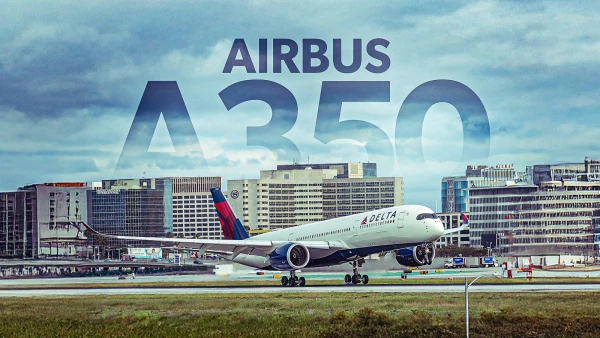
The Airbus A350: A Cockpit That Feels Like Stepping into a Spaceship
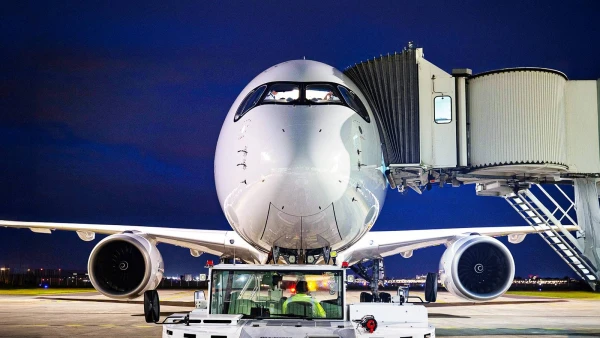
The Airbus A350’s flight deck is a testament to human-centered design, blending intuitive automation with pilot-first ergonomics. The absence of a central yoke frees up space for a large fold-out table at each seat, complete with an integrated keyboard for rapid data entry. Curved cockpit windows reduce glare and blind spots, while heads-up displays project critical flight data directly into the pilot’s line of sight.
Pilots describe stepping into the A350’s cockpit as akin to entering a spaceship, thanks to its panoramic views and advanced computer systems. The flight management system (FMS) treats pilot inputs as safety-verified requests, while the autopilot actively dampens turbulence. The Brake-to-Vacate automation smooths emergency descents and ensures precise runway exits, making every flight safer and more efficient.
The Boeing 787 Dreamliner: Fly-by-Wire Perfection and GPS Resilience
The Boeing 787 Dreamliner is celebrated for its fly-by-wire controls and enhanced navigation systems, which prioritize pilot comfort and situational awareness. Dual heads-up displays project critical flight data into the pilot’s direct line of sight, improving safety during low-visibility takeoffs and landings. Five 15-inch touchscreen displays offer more than double the screen real estate of older models like the 777.
Its advanced electronic flight bag provides seamless access to charts and navigation data, while automated smooth-ride technology detects and counters turbulence in real time. The 787’s RNP (Required Navigation Performance) systems are unmatched, capable of maintaining precision even during a 20-minute GPS signal loss. This allows airlines to fly curved RNP AR routes, navigating around mountains, obstacles, or noise-sensitive areas with remarkable accuracy.
The Future of Flight: Where Technology Meets the Pilot
These five aircraft represent more than just technological milestones—they embody a fundamental shift in aviation. Automation is no longer a tool but a partner, reducing pilot workload while enhancing safety and efficiency. Whether it’s the G700’s tactile feedback, the A380’s paperless revolution, the F-35’s digital battlefield, the A350’s spaceship-like cockpit, or the 787’s GPS resilience, each aircraft pushes the boundaries of what’s possible in the skies.
As aviation continues to evolve, one thing is clear: the future of flight is not just about speed or altitude—it’s about intelligence, intuition, and partnership between human and machine.