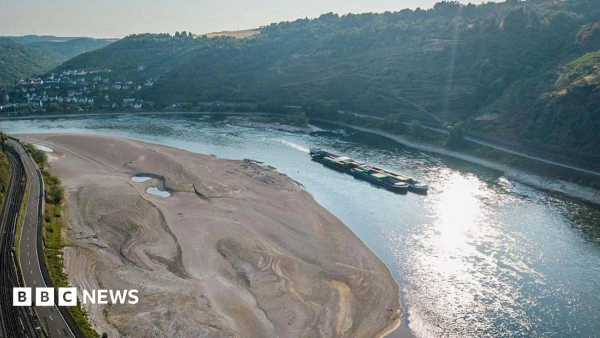
Record Low Water Levels
The Rhine River, a crucial waterway in Europe, has fallen to its lowest levels ever recorded in parts of Germany and the Netherlands. This comes as the continent faces severe heatwaves and drought conditions. Measurements taken in Cologne, western Germany, and Lobith, where the Rhine crosses into the Netherlands, showed lower levels than ever seen before.
Impact on Shipping and Economy
Decreasing water levels have significant implications for navigation and shipping on the Rhine, which could lead to economic fallout. According to Germany's Low Water Information System, 44% of the Rhine's measuring stations recorded extremely low water levels by the end of July. This may force ships to carry less cargo, increasing the number of vessels needed and, as a result, transport costs.
Wider European Drought
The Rhine is not the only river affected; other major European rivers such as the Danube and Italy's Po River are also experiencing record low levels. The Danube, which flows through 10 countries, saw its lowest levels in 30 years in several countries, including Serbia and Romania. This has left Hungary's only nuclear power plant on the brink of shutting down due to reduced water availability for cooling.
Measures to Mitigate the Crisis
Countries are taking measures to manage the situation. In Romania, controlled explosions have been used to clear rocks and increase water flow to a nuclear power plant, while car plants have halted production to reduce electricity consumption. Authorities in Italy have raised the drought alert level to 'high' across the Po Valley, warning of potential disruptions to drinking water supplies.
Climate Change Connection
While there's no clear long-term trend towards lower rainfall in Europe, studies suggest that human-caused climate change increases evaporation through higher temperatures, making drought conditions more likely. This, combined with increased water demand for household, agricultural, and industrial use during hot, dry weather, exacerbates the issue. The 2022 drought in Europe, for example, contributed to increased wildfire activity and higher carbon emissions.
Future Concerns
Prolonged droughts not only affect river water levels but also impact lake water levels, affecting freshwater resources. As Europe faces renewed heatwave conditions, concerns over the economic and environmental implications of these low water levels continue to grow. With temperatures expected to remain high, managing these resources efficiently will be crucial to mitigating the effects of the drought.