Iran is poised for a pivotal struggle over its post-war future, as the current conflict with the US and Israel enters its sixth month. The war has temporarily unified the country, but underlying divisions between the government and security institutions are likely to resurface once the fighting subsides.
The newly appointed supreme leader, Mojtaba Khamenei, faces a daunting task in forging a binding post-war strategy that balances the rival visions of Iran's different power centers. The security establishment, led by the Islamic Revolutionary Guard Corps (IRGC), is expected to push for a recovery that prioritizes military preparedness and deterrence, while the government, headed by President Masoud Pezeshkian, will likely advocate for a focus on trade, oil revenues, reconstruction, and diplomacy.
The outcome of this struggle will have far-reaching implications for Iran's political authority, economic reconstruction, and foreign relations. If the IRGC and its affiliated networks dominate the recovery process, they may reinforce the same structures that expanded under sanctions and war, granting security institutions greater influence over energy, infrastructure, and external economic relations.
On the other hand, if the government succeeds in prioritizing economic recovery and diplomacy, it may be able to reduce the IRGC's grip on power and create space for alternative voices and interests. The next phase of Iran's development will be shaped by the interplay between these competing narratives and the ability of Mojtaba Khamenei to impose a common political direction.
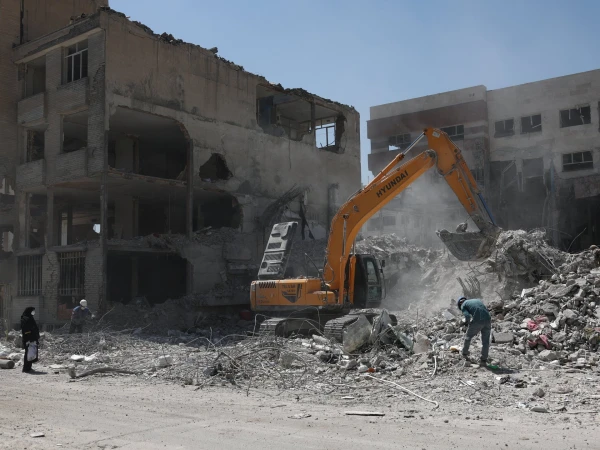
As the war draws to a close, the question of reconstruction will become a battleground for political authority. The government, as the elected body accountable to the public, should theoretically have control over the process. However, the IRGC's extensive influence in key sectors, such as energy and construction, may enable it to shape the direction of the post-war state.