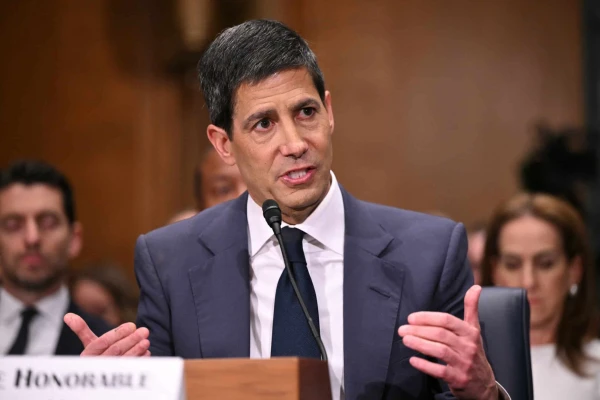
Kevin Warsh, President Donald Trump's nominee to lead the U.S. Federal Reserve, firmly asserted his commitment to central bank independence during a contentious Senate confirmation hearing on Tuesday, directly addressing concerns that he might yield to presidential influence.
Warsh, a former Fed governor, testified before the Senate Banking Committee that he would "absolutely not" act as a puppet for Trump, who has publicly pressured the Fed to aggressively cut interest rates. "The president never asked me to predetermine, commit, fix, decide on any interest rate decision in any of our discussions, nor would I ever agree to do so," Warsh stated.
He emphasized that safeguarding monetary policy from political control is paramount, saying his role would involve "ensuring that the conduct of monetary policy remains strictly independent." Warsh also critiqued the Fed's recent performance, noting it has missed its inflation targets since the COVID-19 pandemic and warning that unchecked inflation becomes increasingly difficult to manage.
The hearing, a critical step for Warsh to succeed current Chair Jerome Powell whose term ends May 15, revealed partisan tensions. All 11 Democrats on the committee previously called for a delay in the nomination until investigations into Powell and Fed governor Lisa Cook are concluded. Republican Senator Thom Tillis has vowed to block all Fed nominees, including Warsh, until a Justice Department probe into Powell is resolved, though he suggested Tuesday that the issues under review may be legitimate.
With 13 Republicans on the 24-member panel, Tillis's opposition could create a deadlock, as Warsh needs committee approval to advance to a full Senate vote. Trump, who has repeatedly criticized Powell for not cutting rates more swiftly, told CNBC on Tuesday he would be disappointed if the new Fed chair did not lower rates quickly, while also targeting Powell over renovation costs at the Fed's headquarters.
Warsh responded to the political scrutiny by arguing that Fed independence isn't undermined when elected officials express their views, but stressed that the central bank itself must remain free from external control. The outcome of his confirmation could hinge on navigating these political crosscurrents while upholding the Fed's traditional autonomy.