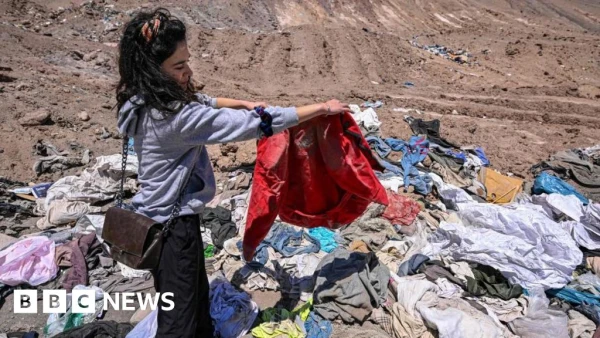
If you've ever dropped old garments into a clothing recycling bin in the UK, North America, or Europe, there's a surprising chance they've traveled thousands of miles to end up illegally dumped in Chile's vast Atacama Desert.
Chile imports approximately 123,000 tonnes of used clothing annually, making it one of the world's largest importers of second-hand textiles. Much of this volume enters through the Iquique Free Trade Zone (Zofri) in northern Chile, where businesses can import goods without paying customs duties or VAT.
Felipe González, general manager of Zofri, explains that the clothing trade provides significant local employment. "It's a sector that gives the most work to local women in the region," he says. "Around 10% work with textiles, sorting clothes by quality. It's accessible labor for people without extensive qualifications."
The higher-quality items are resold locally or exported across Latin America, while lower-quality garments often end up at La Quebradilla, a massive outdoor market near Alto Hospicio where prices start at just 500 Chilean pesos (about 54 cents).
However, the system has a critical flaw: what happens to the substantial portion that doesn't sell? Legally, unsold clothing should be exported, taxed for domestic sale beyond the free-trade zone, or sent to authorized waste facilities. Yet these options cost money, leading some traders to take shortcuts.
"Alto Hospicio is surrounded by desert and hills which are easy to access with a lorry to ditch the clothes," says Miguel Painenahuel from the town's planning department. "We have patrols with cars and cameras to monitor and fine culprits, but there are so many trucks dumping clothes it's really hard to keep on top of it. We don't have the resources."
An estimated 39,000 tonnes of clothing are illegally dumped or burned in the Atacama Desert each year, creating environmental eyesores visible from space and posing fire risks in the arid landscape.
Now, a potential solution is emerging from an unlikely source. Bekir Conkur, a Turkish businessman who has worked in Chile for over 15 years and imports about 50 containers of clothing monthly, is building a $7 million factory to process unwanted textiles.
"We don't want the Atacama Desert to be famous as a tourist attraction where visitors can see mountains of clothes," says Luis Martínez of CircularTec, a Chilean organization promoting circular economy solutions.
Conkur's facility, scheduled to open in coming months, will use specialized machines to transform discarded clothing into fibers and felt without water or chemicals. The resulting material can be used in mattresses, furniture, automotive interiors, and insulation.
"We think we will have the capacity to process 20 tonnes a day," Conkur explains. He acknowledges that a pending legal change provides additional motivation. Last July, Chile added textiles to its Extended Producer Responsibility Law, which will eventually require fashion brands, retailers, and importers to finance and organize proper end-of-life management for clothing.
For Conkur, this represents both compliance and opportunity. He hopes to process unwanted textiles from across Chile and potentially other countries, turning an environmental problem into a sustainable business while addressing a global waste stream few consumers realize their donations might be feeding.