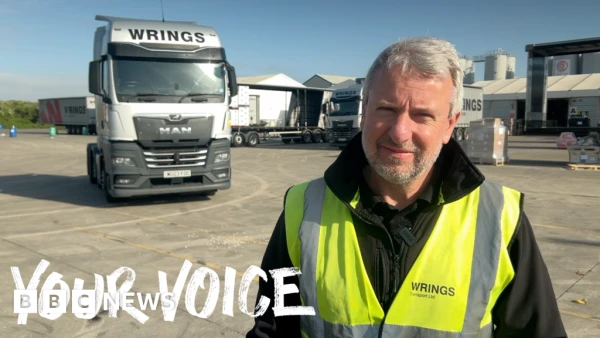
A family-run haulage firm in Bristol has revealed that escalating fuel costs, driven by the US-Iran conflict, have added a staggering £100,000 to its monthly expenses. Stuart Wring, managing director of Wrings Transport, described the rapid price increases as "crazy," forcing the company to pass the burden directly to customers through a transparent fuel surcharge mechanism.
"March was £45,000 over budget," Wring explained. "And April's already going through the roof—it will be £60,000 over easily."
With 67 trucks on the road, each requiring 450 litres to fill, the ripple effect is profound. Every penny added to diesel prices ultimately inflates costs for supermarkets, retailers, and consumers, contributing to broader economic strain. Karen Betts, chief executive of the Food and Drink Federation, recently warned that food inflation could soar to at least 9% by December.
However, not all can offset these hikes. Margaret Smith, a carer in Somerset, highlighted the personal toll, noting that stagnant mileage allowances have effectively slashed her income.
"We are having to carry the extra costs ourselves, cutting our wages effectively," she said. "It is very distressing to say the least."
The crisis extends beyond transport. Across the UK, 1.5 million homes reliant on heating oil face doubled prices, pushing some to extreme measures. Emma Gwynn, a mother of three in Somerton, shared her family's decision to switch off their oil boiler entirely.
"We used to pay around £500 to refill our oil tank," Gwynn noted. "Now it will be £1,200 minimum. I was last this morning, so I had the cold shower."
While the government announced a £53 million support scheme, eligibility is limited to those on benefits like Universal Credit, leaving many working families and pensioners without aid. John Harrison, 79, from Gloucestershire, observed that some are already turning off heating and going to bed early to conserve warmth.
As fuel prices hit their highest rise in over three years, the economic and human impacts of the Middle East conflict continue to unfold across British households and businesses.