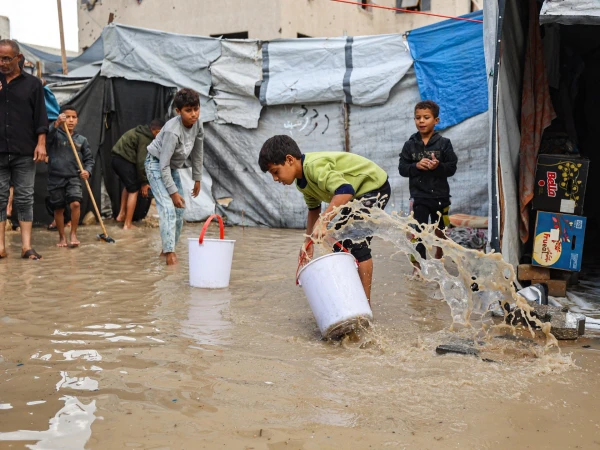
Thousands of Palestinians in Gaza are once again fleeing their makeshift shelters as relentless winter rains transform the territory’s already devastated landscape into a waterlogged disaster zone. The flooding has submerged tents, collapsed weakened structures, and left families scrambling for safety amid a humanitarian crisis that shows no signs of easing.
The deluge comes at a time when Gaza’s infrastructure is barely functional. Years of conflict, blockades, and now the destruction of critical water and sanitation systems have left the territory’s 2.3 million residents in a precarious state. Aid organizations report that the situation is deteriorating rapidly, with displaced families—many already living in overcrowded tents or partially destroyed buildings—now facing hypothermia, disease, and further displacement.
"We have no dry clothes, no blankets, and the tents are collapsing around us," said Amal Hassan, a mother of four who has been displaced multiple times since the latest escalation in violence. "The children are shivering, and we have nowhere to go. The aid that does arrive is never enough."
Israeli restrictions on the entry of essential supplies, including fuel, medicine, and construction materials, have compounded the crisis. Humanitarian groups warn that without immediate access to clean water, food, and shelter materials, the risk of disease outbreaks such as cholera and respiratory infections will skyrocket. The United Nations Office for the Coordination of Humanitarian Affairs (OCHA) has described the situation as "catastrophic," with nearly 85% of Gaza’s population already dependent on some form of aid.
"The flooding is not just a natural disaster—it’s a man-made catastrophe," said Dr. Ghassan Abu-Sittah, a Gaza-based physician and human rights activist. "The blockade has crippled our ability to respond. We are seeing a collapse of basic services, and the international community’s response has been woefully inadequate."
Efforts to provide emergency relief have been hampered by the ongoing hostilities and the destruction of roads and bridges. Aid convoys struggle to reach affected areas, and even when supplies arrive, the sheer scale of the crisis makes distribution nearly impossible. The Palestinian Red Crescent Society has called for an immediate ceasefire to allow for the delivery of critical aid, but so far, such pleas have gone unanswered.
As the rains continue to pour, the displaced are bracing for the worst. With temperatures dropping and the risk of further flooding looming, the question remains: how much more can Gaza’s people endure before the world takes meaningful action?
For now, families like Amal’s are huddled together in whatever shelter they can find, praying for a break in the storm—and in the cycle of violence that has defined their lives for generations.