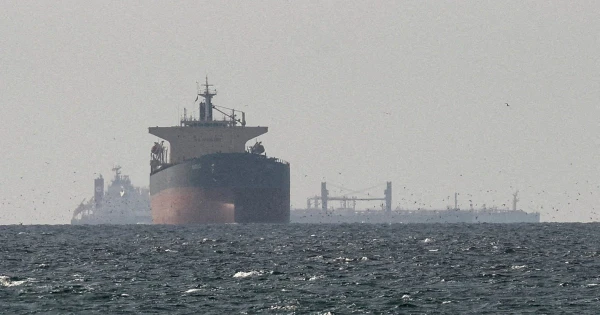
Global leaders and energy executives are breathing easier today as the strategically vital Strait of Hormuz has officially reopened to commercial traffic, ending a tense period of restricted passage that sent shockwaves through international oil markets.
For weeks, heightened military tensions between the United States and Iran led to a significant throttling of maritime traffic through the narrow waterway, which handles approximately one-fifth of the world's oil supply. The resulting supply constraints triggered a sharp spike in global oil prices, raising concerns about inflation and economic stability worldwide.
"The reopening is a welcome development for global energy security," noted one European energy minister, speaking on condition of anonymity. "This channel is not just a trade route—it's an artery for the world economy."
Industry analysts report that the easing of transit restrictions has already begun to stabilize crude prices, though markets remain watchful for any signs of renewed friction. The Strait serves as a critical chokepoint, with tankers carrying oil from major producers like Saudi Arabia, Iraq, and the United Arab Emirates passing through its narrow confines.
While diplomatic efforts appear to have temporarily de-escalated the situation, experts caution that the underlying geopolitical tensions in the region remain unresolved. The international community continues to monitor the situation closely, hoping for sustained open access to this essential maritime corridor.