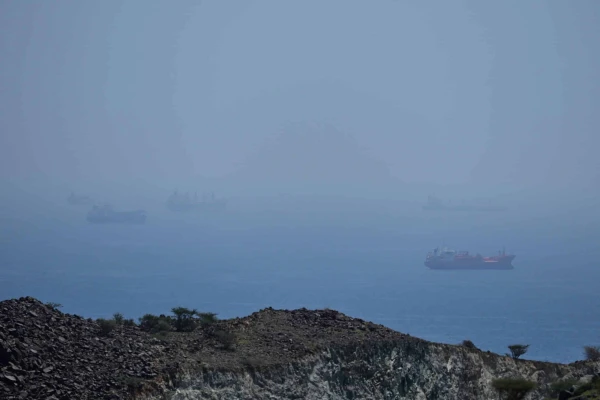
Oil prices surged in early trading Sunday as renewed tensions between the United States and Iran disrupted tanker traffic through the critical Strait of Hormuz, a vital artery for global energy supplies.
US crude oil prices jumped 6.4% to $87.88 per barrel on the Chicago Mercantile Exchange, while Brent crude, the international benchmark, rose 6.5% to $96.25 per barrel. The price spike followed Iran's reversal on Saturday of its earlier pledge to reopen the strategic waterway, which handles approximately one-fifth of the world's oil shipments.
"The market reaction followed more than two days of growing hopes and dashed expectations involving the strait," market analysts noted.
Iran initially announced Friday it would allow full commercial traffic through the passage, causing crude prices to plummet over 9%. However, Tehran changed course after President Donald Trump declared that a U.S. Navy blockade of Iranian ports would remain in effect.
Over the weekend, Iran's Revolutionary Guard fired on several vessels, and U.S. forces reportedly seized an Iranian-flagged cargo ship attempting to circumvent the blockade. The escalating confrontation has created what energy experts describe as one of the most severe global energy crises in decades.
Countries in Asia and Europe that rely heavily on Middle Eastern oil imports have been particularly affected by the supply disruptions and production cuts. Meanwhile, rapidly rising prices for gasoline, diesel, and jet fuel are impacting businesses and consumers worldwide.
When asked when American motorists might see gasoline prices drop below $3 per gallon on average, Energy Secretary Chris Wright suggested such relief might not arrive until next year.
"But prices have likely peaked, and they'll start going down," Wright told CNN's "State of the Union" on Sunday.
The ongoing conflict between the U.S., Israel, and Iran, now in its eighth week, continues to create volatility in global energy markets, with crude oil prices experiencing dramatic fluctuations since hostilities began.