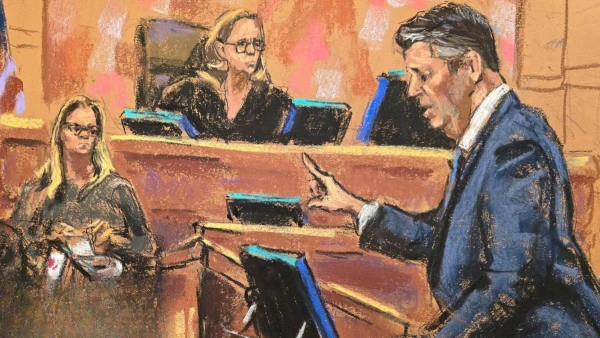
A Brooklyn federal court has delivered a mixed verdict in a landmark case against Chinese tech giant Huawei, finding the company guilty of conspiracy to steal trade secrets and bank fraud while acquitting it of the more serious racketeering charge.
After a two-month trial, jurors concluded that Huawei engaged in a pattern of deception to gain a competitive edge, including lying to financial institutions about its business dealings in Iran and allegedly stealing proprietary technology from competitors. However, the jury rejected prosecutors' assertion that Huawei operated as a criminal enterprise under the Racketeer Influenced and Corrupt Organizations (RICO) Act.
Huawei's defense team maintained that the charges were built on a flawed premise, arguing that the company's global success—spanning 170 countries and employing over 200,000 people—was the result of innovation and hard work, not criminal conduct. In a statement following the verdict, Huawei emphasized that the racketeering acquittal "underscores the baseless nature of these allegations and vindicates our unwavering stance over the past eight years."
The trial centered on allegations that Huawei systematically violated U.S. sanctions and engaged in corporate espionage to dominate the telecommunications market. Prosecutors painted a picture of a company willing to "do whatever it took" to expand, including falsifying financial records and misappropriating trade secrets. Assistant U.S. Attorney Meredith Arfa told jurors during closing arguments that Huawei's actions over two decades demonstrated a deliberate strategy to undermine rivals and deceive regulators.
Huawei's lead defense attorney, Brian Heberlig, countered that the company's growth was a testament to its legitimate business practices. "The RICO count alleged that Huawei was a corrupt organization with a corporate culture committed to crime," Heberlig argued. "The jury soundly rejected that overreach."
While the verdict marks a significant setback for Huawei, the company's legal team has vowed to pursue all available avenues, including a potential appeal. Sentencing is scheduled for September 2027, with Heberlig pledging to advocate for the lightest possible penalty. "Huawei will not rest until every argument has been exhausted," he stated. "We are confident that justice will ultimately prevail."
The case traces back to 2019, when U.S. authorities first filed charges against Huawei, culminating in the 2018 arrest of senior executive Meng Wanzhou in Canada. Meng, also known as Cathy Meng, was detained for nearly three years before reaching a deferred prosecution agreement that allowed her return to China in 2021.