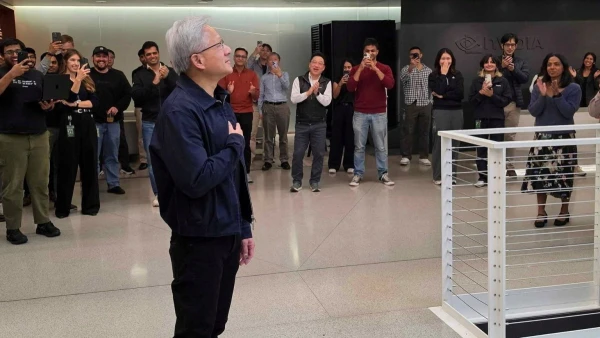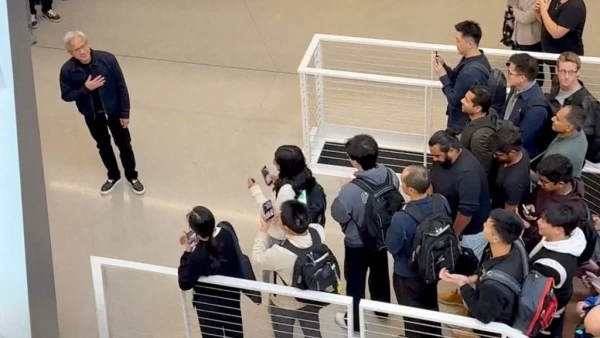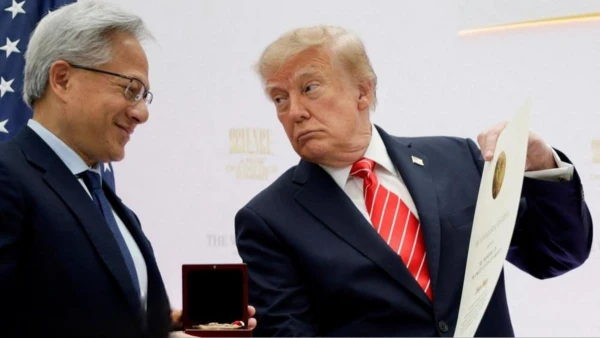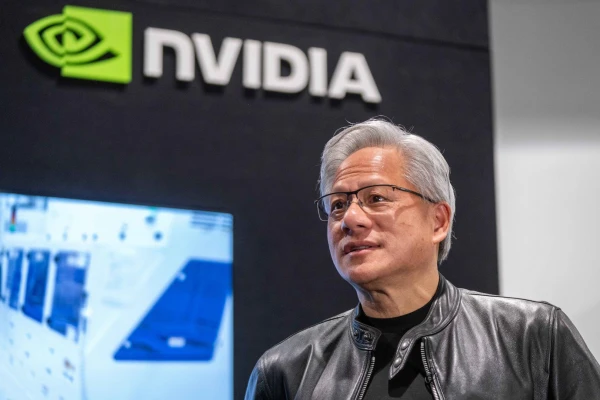
The U.S. Department of Justice has declined to comment on former President Donald Trump’s explosive claim that his administration launched a ‘thorough’ investigation into Nvidia CEO Jensen Huang. Speaking at a rally in Florida over the weekend, Trump asserted that federal authorities had scrutinized Huang’s ties to the company, though he provided no evidence to support the allegation.
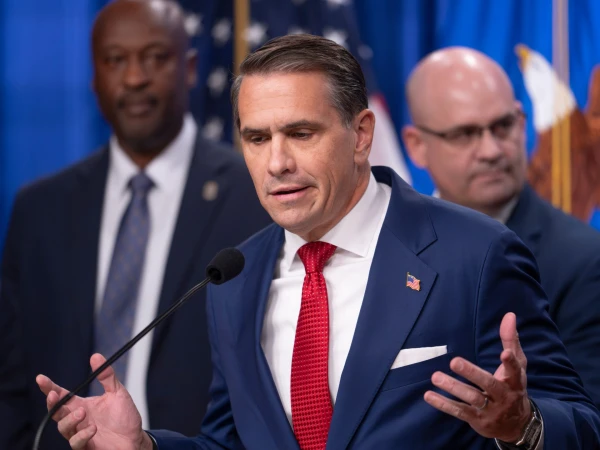
When pressed by reporters on Monday, U.S. Attorney General Todd Blanche refused to confirm or deny whether such an investigation had ever taken place. ‘We do not comment on ongoing or past investigations,’ Blanche stated, adding that the DOJ’s policy prohibits discussing matters that could compromise legal proceedings. His refusal to engage with the question has fueled speculation about the nature of the supposed probe and its potential implications for one of Silicon Valley’s most influential tech leaders.
Huang, a billionaire engineer and the co-founder of Nvidia, has long been a prominent figure in the tech industry, steering the company to record profits through its dominance in AI and semiconductor markets. Nvidia’s stock has surged in recent years, making it one of the most valuable companies in the world. The company’s ties to the U.S. government—particularly in supplying chips for military and AI applications—have also drawn increased scrutiny from lawmakers and regulators.
Trump’s remarks come amid a broader pattern of unsubstantiated claims about investigations targeting his political allies and business associates. Critics argue that his statements are part of a strategy to undermine trust in federal institutions, while supporters view them as evidence of a ‘deep state’ targeting conservative figures. The DOJ’s silence has done little to quell the controversy, leaving Huang’s legal and business reputation in a state of uncertainty.
Legal experts note that the attorney general’s refusal to address the matter is standard procedure, designed to prevent interference with potential investigations. However, the lack of transparency has only deepened public skepticism, particularly in an election year where trust in government institutions is already fragile.