A senior Iranian lawmaker has declared that Tehran will never relinquish control over the Strait of Hormuz, framing it as an "inalienable right" that will soon be codified into law.
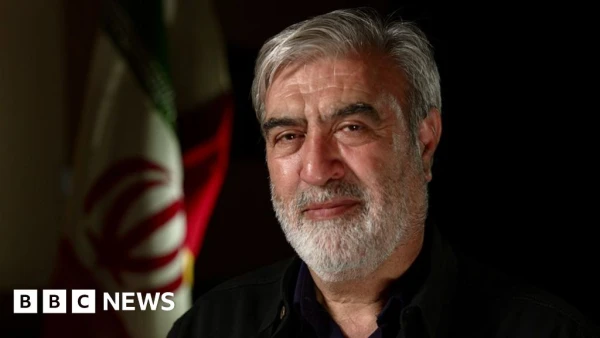
Ebrahim Azizi, a former commander in Iran's Islamic Revolutionary Guard Corps (IRGC) and head of parliament's National Security and Foreign Policy Committee, told the BBC that Iran alone will determine passage permissions through this critical waterway. "We are introducing a bill in parliament based on constitutional provisions covering environment, maritime safety, and national security," Azizi stated. "The armed forces will implement this law."
This declaration comes as global concerns mount about potential economic shocks should Iran restrict traffic through the strait, which handles approximately one-fifth of the world's oil shipments. Tehran now views its control over this maritime chokepoint not merely as a temporary bargaining chip but as long-term strategic leverage.
"The first priority for Iran after the war is to restore deterrence, and the Strait of Hormuz is among Iran's principal strategic leverages," explained Mohammad Eslami, a research fellow at the University of Tehran. "Tehran is open to discussing how other nations can benefit from Iran's new framework for the strait, but control is the bottom line."
Regional reactions have been sharply critical. Dr. Anwar Gargash, diplomatic adviser to the president of the United Arab Emirates, described Iran's stance as "an act of hostile piracy" that could set a "dangerous precedent" for other strategic waterways worldwide.
Azizi dismissed such criticism, retorting that Gulf states cooperating with U.S. military presence were "the pirates who sold our region to the Americans." He added that the United States represented "the biggest pirate in the world."
Internal tensions surfaced recently when Iran's Foreign Minister Abbas Araghchi posted on social media that the Strait of Hormuz was "completely open," prompting U.S. President Donald Trump to respond with a capitalized "THANK YOU." Iranian news outlets linked to the IRGC quickly rebuked Araghchi, with the state-run Mehr news agency calling his post a gift to Trump that allowed him to "declare himself the winner of the war."
Araghchi later clarified that the waterway remained open only to ships authorized by the IRGC navy through designated routes requiring toll payments.
Azizi dismissed suggestions of internal divisions, asserting that "when it comes to national security, there are no moderate or hardline approaches."
The fate of the strait will be a central issue in high-level talks reportedly set to resume in Islamabad, with a U.S. delegation expected to be led again by Vice-President JD Vance. Iranian officials remain silent on whether their team, led by parliamentary speaker Mohammad Bagher Ghalibaf, will participate, with local media reporting Iran won't attend while U.S. blockades of Iranian ports remain in force.
Trump has repeatedly demanded Iran open the maritime corridor, recently accusing Tehran of attempting to "blackmail" the United States. Azizi dismissed these accusations, saying, "We are just defending our rights in the face of American blackmail."
The lawmaker also addressed Iran's near-total digital blackout, stating the internet ban would be lifted "when it is safe and secure so that the enemy will not take advantage." Regarding recent executions of protesters, Azizi repeated government claims of U.S. and Israeli intelligence involvement in the unrest.
As negotiations approach, the strategic waterway remains both a geopolitical flashpoint and what Azizi described as "one of our assets to face the enemy"—a weaponized corridor whose control Iran appears determined to cement regardless of international pressure.