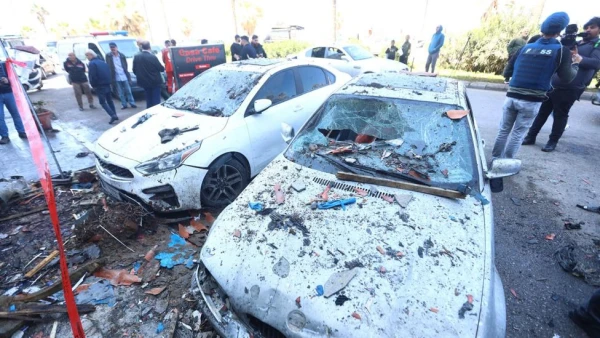
The Israeli military launched a significant wave of airstrikes across southern Lebanon on Wednesday morning, signaling that a newly announced ceasefire between the United States and Iran does not extend to the ongoing conflict with the Iranian-backed Hezbollah group.
Strikes targeted areas including Tyre and Nabatieh, occurring just hours after the US-Iran agreement was made public. The office of Israeli Prime Minister Benjamin Netanyahu explicitly rejected claims by Pakistani mediators that the ceasefire covered Lebanon, with military officials confirming that both air and ground operations continue unabated.
"For Israel, the US-Iran ceasefire deal does not apply to Lebanon, where it is fighting the Iranian-backed armed group Hezbollah," military analysts noted.
The conflict has already taken a devastating toll on Lebanon. Official reports indicate over 1,500 fatalities, including 130 children, while more than 1.2 million people—approximately one-fifth of the population—have been displaced. Most displaced individuals come from Shia Muslim communities in southern regions, the Bekaa Valley, and Beirut's southern suburbs, areas where Hezbollah maintains significant influence.
Border villages have been largely destroyed as Israeli forces work to establish what they describe as a "security buffer zone," aiming to dismantle Hezbollah's infrastructure and push fighters away from the border. This strategy has raised serious concerns about potential long-term occupation and the possibility that many residents may never return to their homes.
Hezbollah, which has not claimed any attacks since the ceasefire announcement, declared the group was "on the threshold of a major historic victory" and cautioned displaced families against returning home until a formal ceasefire is established.
The current escalation traces back to Hezbollah's rocket attacks on Israel, launched in retaliation for the killing of Iranian Supreme Leader Ayatollah Ali Khamenei during the war's initial stages. These attacks continued despite a November 2024 ceasefire agreement specifically for Lebanon.
Israeli officials had previously indicated their intention to maintain military operations in Lebanon regardless of any deal with Iran. However, recent reports from Israeli military sources suggest the army may not advance further into Lebanese territory and acknowledges that forcibly disarming Hezbollah may not be feasible.
The conflict has exposed surprising military capabilities from Hezbollah, contradicting widespread assumptions that the group had been severely weakened since their last major conflict. Hezbollah has consistently launched rockets and drones into northern Israel while engaging Israeli troops directly in southern Lebanon.
Domestically, Hezbollah faces mounting criticism from many Lebanese who blame the group for dragging the country into an unwanted war and prioritizing Iranian interests. Despite this criticism, Hezbollah maintains substantial support among Lebanon's Shia population.
The massive displacement crisis has further strained Lebanon's already fragile infrastructure. Schools converted into shelters have reached capacity, forcing many to sleep in makeshift tents in public spaces and even vehicles. The influx of displaced families into new communities has heightened sectarian tensions, with residents fearing they too could become targets of Israeli attacks.
Following the 2024 ceasefire, the Lebanese government announced plans to disarm Hezbollah—a group originally formed in the 1980s in response to Israel's occupation during Lebanon's civil war. To date, Hezbollah has refused to discuss relinquishing its weapons.
President Joseph Aoun, a former army chief, has ruled out using force against Hezbollah, warning that such action could deepen divisions and spark violence. In response to the latest escalation, his government made the historic announcement that Lebanon is open to direct negotiations with Israel—a significant development given the two countries lack diplomatic relations. Israel has thus far ignored this offer.