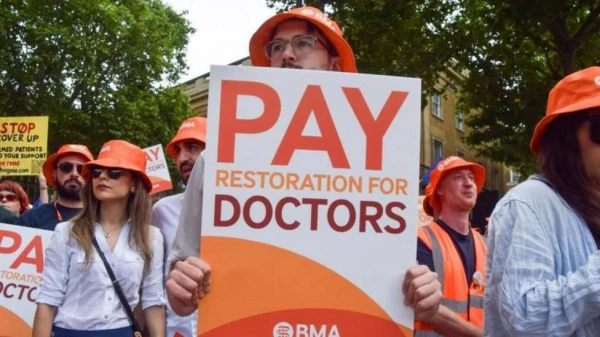
The head of NHS England has stated that hospitals are managing effectively during the ongoing six-day strike by resident doctors, which began on Tuesday. In a communication to health managers, Sir Jim Mackey acknowledged the challenges but expressed cautious optimism about the initial response.
"There's a long way to go, but it looks like we're in as good a place as we could hope on day one," Sir Jim noted, while recognizing the strain on staffing and the disruptive timing following the Easter weekend.
This marks the 15th walkout in a prolonged pay dispute. Resident doctors, who constitute nearly half of the medical workforce, are seeking improved compensation. The British Medical Association (BMA) has described the strike as "regrettable," attributing the action to the government's failure to present a credible offer. Dr. Jack Fletcher, a BMA leader, emphasized that the strikes were "entirely avoidable" and warned of long-term consequences for the NHS if doctors continue to be undervalued.
To mitigate the impact, hospitals have deployed senior doctors to cover emergency and urgent care services. While some pre-planned operations and treatments have been postponed, the majority are proceeding as scheduled. The dispute stems from collapsed negotiations last month, with the BMA arguing that, despite a 33% pay increase over four years, doctors' real-term earnings have declined by about a fifth since 2008 due to inflation.
In response, Health Secretary Wes Streeting defended the government's offer as "generous," highlighting additional benefits such as expanded training places and coverage for exam fees. He also pointed to public sentiment, citing YouGov polling that shows majority opposition to the walkouts. Meanwhile, Conservative leader Kemi Badenoch proposed banning strikes for doctors, similar to restrictions on police and armed forces, accusing the Labour government of prioritizing unions over patients.