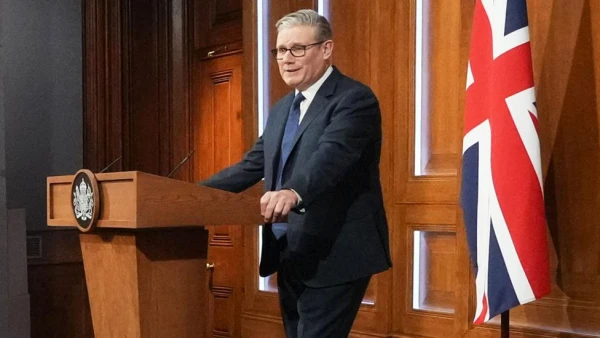
UK Prime Minister Sir Keir Starmer has arrived in Saudi Arabia for a critical diplomatic visit, following the announcement of a two-week ceasefire between the United States and Iran. The trip, planned prior to the ceasefire, now focuses on international efforts to solidify the temporary peace.
According to a Downing Street spokesperson, Starmer is expected to "discuss diplomatic efforts to support and uphold the ceasefire" with Gulf allies. He is scheduled to return to the UK on Friday and will also meet with British military personnel stationed in the region.
In a statement, Prime Minister Starmer welcomed the agreement, saying it "will bring a moment of relief to the region and the world."
"Together with our partners we must do all we can to support and sustain this ceasefire, turn it into a lasting agreement and reopen the Strait of Hormuz," he added.
The ceasefire was reached just over an hour before a deadline set by former US President Donald Trump, who had threatened severe consequences if Iran did not agree to end hostilities and unblock the vital Strait of Hormuz. In a social media post, Trump stated the ceasefire was "subject to the Islamic Republic of Iran agreeing to the COMPLETE, IMMEDIATE, and SAFE OPENING of the Strait of Hormuz."
Iranian Foreign Minister Abbas Araghchi announced that Iran would agree to the pause "if attacks against Iran are halted," adding that "for a period of two weeks, safe passage through the Strait of Hormuz will be possible."
The conflict began in February with coordinated US and Israeli attacks on Iran over nuclear weapon concerns, prompting Iranian retaliatory strikes across the Gulf region and a blockade of the Strait of Hormuz—a chokepoint for roughly one-fifth of global energy shipments. This blockade caused crude oil prices to spike, leading to increased fuel costs and economic concerns worldwide.
UK political reactions were mixed. Conservative shadow housing secretary Sir James Cleverly called the ceasefire an "opportunity for Iran to make some serious choices" about its behavior, emphasizing that preventing Iran from acquiring a nuclear weapon remains an "absolute priority."
Liberal Democrat leader Sir Ed Davey questioned the reliability of the US under Trump, labeling him a "totally unreliable ally." Davey stressed the economic imperative of reopening the strait, warning that otherwise people would "pay a heavy price in inflation and lower growth."
Last week, the UK hosted a virtual summit with over 40 countries to begin assembling a coalition to ensure security in the Strait of Hormuz post-conflict, followed by a military planning conference on Tuesday.