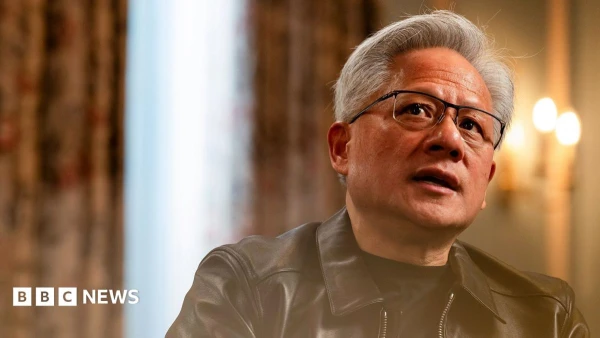
Jensen Huang’s Stunning Reinstatement as Nvidia CEO Reshapes Tech and Geopolitics
In a corporate earthquake that sent shockwaves through Wall Street and Washington, Nvidia’s board reversed its decision to oust CEO Jensen Huang just days after his temporary removal—sparking a $1 trillion surge in the chip giant’s market value. The dramatic U-turn, driven by a rare intervention from President Trump and a White House assurance of no national security risks, underscores Huang’s unparalleled influence over the AI revolution and the fragile ecosystem it has spawned.
A Reversal of Unprecedented Scale
The about-face was as swift as it was seismic. Last week, Nvidia’s interim leadership had signaled a strategic shift away from Huang’s aggressive expansion, hinting at a more cautious approach to global chip sales. Those plans were abruptly shelved after Trump personally contacted the board, delivering a blunt directive: "You’re unfired."
The move mirrors the most dramatic corporate comebacks in history—comparable to Steve Jobs’ return to Apple or Sam Altman’s reinstatement at OpenAI—but with stakes far higher. Nvidia’s chips are the backbone of the AI boom, powering everything from data centers to cutting-edge military and surveillance systems. Huang’s reinstatement wasn’t just a personal victory; it was a declaration that the company—and by extension, the AI industry—could not function without him.
The Geopolitical Chess Game Behind the Scenes
The decision was not made in a vacuum. Reports indicate deep divisions within the Trump administration over China policy, with Huang emerging as a pivotal figure in the debate. Last September, Huang publicly advocated for easing restrictions on advanced chip exports to China, arguing that isolation would backfire. His influence over both U.S. and Chinese leadership made him uniquely positioned to navigate the fraught relationship between the two superpowers.
"Jensen Huang’s return is a reminder that in the AI era, the people who control the technology pipelines wield power akin to world leaders."
The White House’s swift endorsement of Huang’s reinstatement suggests a calculated bet: that his continued leadership is essential to maintaining U.S. dominance in AI, even as scrutiny over Nvidia’s compliance with export controls intensifies. An independent investigation into the company’s practices remains ongoing, but for now, Huang’s authority appears unassailable.
The Fragile Foundation of the AI Boom
Nvidia’s stock valuation has become the lifeblood of the AI industry, underwriting loans, data center construction, and shareholdings that sustain the sector’s explosive growth. Huang’s exit had threatened to unravel this delicate web, raising alarms about "circular financing" and the sustainability of the AI gold rush. His return has quelled those fears—for now.
Yet the political landscape is shifting. Public backlash against data centers and AI, evident in recent U.S. midterm elections, has forced a reckoning. Democrats in Congress have vowed to investigate both Trump and Huang, with the CEO set to testify next week. The stakes could not be higher: the future of the AI industry, the U.S.-China tech war, and the global economy now hinge on one man’s ability to deliver.
A New Era for Nvidia—and the World
Huang’s reinstatement is more than a corporate drama; it’s a geopolitical inflection point. As AI reshapes industries, militaries, and societies, the people who control its infrastructure hold unprecedented power. Nvidia’s board learned the hard way that firing Jensen Huang wasn’t just a business decision—it was a gamble the world couldn’t afford to take.
For now, the AI revolution marches on, led by a man who has just proven he is, indeed, too big to fire.