One year after militants opened fire on tourists in the picturesque Baisaran valley near Pahalgam, Kashmir, the families of the 26 victims continue navigating lives forever altered by loss.
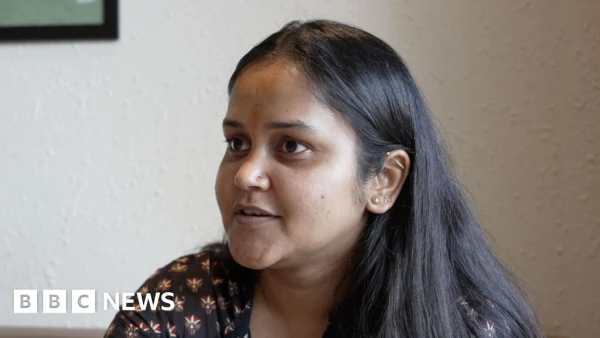
In Kanpur, Aishanya Dwivedi preserves her bedroom exactly as it was when she shared it with her husband Shubham. "That side of the bed is Shubham's," she explains. "I don't sit or lie down there. Even in sleep, I avoid it." The mirror he installed after she mentioned its absence remains on the wall—a small testament to their brief marriage, cut short just two months after their wedding during what was supposed to be a joyful holiday.
"I did not get enough time to make a lot of memories," Aishanya reflects. "Yet, Shubham gave me so many memories to live with."
The attack on April 22, 2025, targeted mostly Hindu men enjoying the stunning meadow high above Pahalgam, a popular tourist destination in Indian-administered Kashmir. The region, claimed by both India and Pakistan, has long been a flashpoint between the nuclear-armed neighbors. Delhi blamed Pakistan-based militants for the massacre—a charge Islamabad denied—leading to retaliatory airstrikes and four days of intense cross-border shelling before an unexpected ceasefire.
While official responses focused on security reviews and tightened restrictions, the deepest consequences unfold in private spaces where grief refuses to recede.
For Aishanya, speaking publicly about her loss has become therapeutic. "Speaking to the media has been like therapy for me," she says, despite facing online trolling after suggesting Prime Minister Narendra Modi should have named the victims in parliament. "I will speak, I will go out, I will do everything I want," she asserts. "Those people are nobody to dictate how I should behave after I have lost my husband."
Each evening, she sits with Shubham's parents for an hour, retelling stories about him—conversations that circle familiar details, slightly reshaped each time.
In another home, silence defines the mourning. Rajesh Narwal's son Vinay, a 26-year-old naval officer, was killed while on his honeymoon—married less than a week. A haunting photograph of Vinay's wife sitting motionless beside his body circulated widely after the attack.
Now, Vinay's belongings remain packed and unopened. Family members avoid saying his name or displaying his photograph. "None of us are able to muster up the courage," Rajesh admits. "We can't even bear to put his photo up anywhere in the house."
Memories surface relentlessly. Rajesh recalls daily cricket matches in their courtyard when Vinay was a child—the boy waiting eagerly for his father's return from work. "We are simply unable to deal with grief. We are still grieving," he says. "The moment I come home... it feels like someone has touched a raw nerve. The pain is unbearable."
Both families have developed contrasting coping mechanisms—one preserving memories through constant conversation, the other through protective silence—yet both navigate the same profound absence.
Aishanya continues writing and listening to music, though she acknowledges, "I end up crying while writing..." She adds, "The grief of losing a son or a husband will never go away. But that does not mean we stop living our lives."
As the anniversary passes, these families embody the enduring human cost of violence in a disputed region where political tensions often overshadow individual tragedies. Their stories reveal how grief transforms but never disappears, lingering in unmoved furniture, unspoken names, and the quiet spaces where loved ones should be.