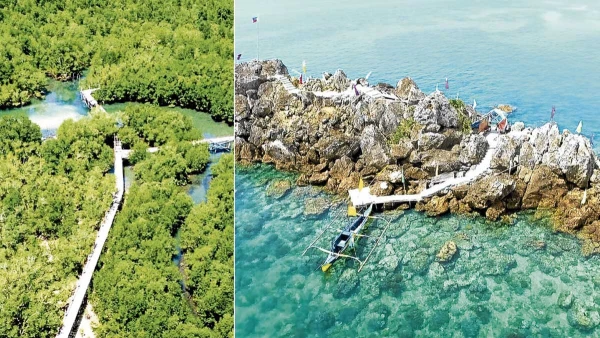
A remarkable environmental transformation is underway along the western coast of Albay, where Ligao's once-depleted coastal waters are now teeming with life after a decade of dedicated conservation efforts.
Following the successful curtailment of illegal fishing practices, particularly blast fishing that was halted in 2011, marine ecosystems have experienced a dramatic recovery. Fish populations have rebounded significantly, coral reefs have regenerated, and mangrove forests have expanded substantially—all thanks to a coordinated approach involving local government, community members, and environmental organizations.
Bob Porcalla, Ligao's coastal resource management officer and tourism coordinator, described the dramatic turnaround: "After blast fishing activities were stopped, we now see schools of fish in areas that used to be empty. Even species unseen for years are making a comeback."
The statistics tell a compelling story of growth and restoration. According to the City Environment and Natural Resources Office, marine sanctuaries have expanded from just 21 hectares in 2004 to 135 hectares today. This expansion has created protected spaces where marine life can thrive without the threat of destructive fishing practices.
Porcalla highlighted another encouraging sign of recovery: "We've witnessed the return of leatherback and green sea turtles, whose hatching indicates the waters are clean and safe for marine life."
To maintain these hard-won gains, 21 Bantay Dagat (sea patrol) members conduct regular seaborne patrols. Porcalla emphasized that "this is key to preventing illegal fishing and protecting the sanctuary."
For local residents who depend on the sea for their livelihoods, the changes are tangible and meaningful. Rodolfo Uson, 62, a former blast fisher who now serves as a Bantay Dagat member, described his role as a way to make amends for past mistakes.
"I'm proud to see the difference now," Uson said. "The next generation will enjoy the beauty and richness of our seas."
Other residents like Jaime Marbella and Paulito Mendoza have experienced firsthand the benefits of Ligao's Integrated Coastal Resource Management program, established in 2012. The program combines city government support with assistance from the Armed Forces of the Philippines, police, and the Bureau of Fisheries and Aquatic Resources to enforce anti-illegal fishing measures.
Beyond enforcement, Ligao's approach emphasizes environmental education and community participation. "Communities follow proper garbage disposal, practice strict segregation, and take part in coastal cleanups," Porcalla explained. "This is why our seas remain clean."
Mangrove rehabilitation has further strengthened Ligao's coastal resilience. Three coastal barangays—Cabarian, Maonon, and Catburawan—have planted over 130,000 mangrove propagules across seven species. These restored mangrove forests serve as natural barriers against typhoons and other disasters while providing crucial habitat for marine life.
Maria Soledad Prena, the city's environment officer, noted the broader impact: "Residents' active participation in conservation benefits everyone, protecting both biodiversity and livelihoods."
Ligao's comprehensive conservation efforts have earned national recognition, demonstrating how community engagement and determined environmental stewardship can reverse ecological damage and create sustainable marine ecosystems for future generations.