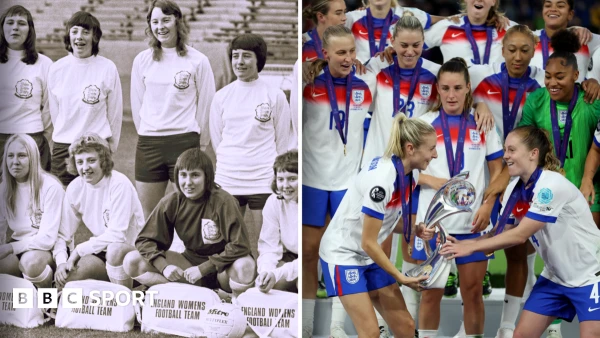
England's women's football team reaches a historic milestone this weekend as they prepare for their 500th international match.
When Sarina Wiegman's squad faces Iceland in Reykjavik on Saturday, they'll mark five centuries of fixtures that trace an extraordinary journey from official prohibition to European championship glory.
"The game is most unsuitable for females," declared the Football Association in 1921, imposing a ban that would last fifty years.
That decision relegated women's football to park pitches and small venues until 1971, when the FA finally reversed its position. The following year marked the beginning of the official England women's team with a 3-2 victory over Scotland in Greenock before just 400 spectators.
The Early Milestones
England's first major tournament appearance came in 1984 when they reached the final of a UEFA competition that preceded the Women's Euros. Though they fell to Sweden on penalties after a dramatic two-legged final, the match signaled the team's growing competitiveness on the European stage.
Five years later, the Lionesses made their Wembley debut in 1989, playing Sweden as a curtain-raiser to a men's international. The symbolic importance of stepping onto English football's most hallowed ground wasn't lost on players or supporters.
Professionalization and Progress
A significant turning point arrived in 1993 when the FA assumed control of women's football from the struggling Women's Football Association. This transition brought greater resources and organizational support, leading to the creation of the Women's Premier League in 1994.
Hope Powell's appointment as the first full-time England women's coach in 1998 accelerated the team's development. Under her fifteen-year tenure, the Lionesses qualified for six major tournaments and reached the Euro 2009 final.
"We hope this will allow our girls time to concentrate on helping England qualify for major tournaments on a consistent basis," Powell said in 2009 when the FA introduced central contracts for 17 players, enabling them to train and compete as full-time professionals.
Breaking New Ground
The 2005 European Championship hosted in England demonstrated the growing appeal of women's football, with nearly 30,000 fans attending the opening match against Finland in Manchester. Television audiences peaked at three million viewers during the tournament.
England's first World Cup medal came in 2015 with a bronze finish in Canada. The team captured the nation's attention, with 2.5 million viewers tuning in for matches despite significant time differences.
Triumphant Transformation
The Lionesses' breakthrough arrived in 2022 when they claimed their first major trophy, winning the European Championship on home soil. The victory transformed players into household names and inspired a new generation of female footballers.
As England approaches its 500th match while seeking qualification for next year's World Cup in Brazil, the journey from prohibition to prominence stands as one of English sport's most remarkable transformations. Saturday's fixture represents not just another game, but a celebration of resilience, progress, and the enduring power of football to overcome barriers.