Global financial markets experienced a volatile session on Tuesday, with stock indices declining and oil prices rising as uncertainty mounted over the resumption of peace talks between the United States and Iran. The two-week ceasefire in the Middle East was set to expire, adding to investor anxiety.
Shortly after the US stock market closed, President Donald Trump announced an extension of the ceasefire while maintaining a military blockade on Iranian ports. This move came amid hopes that negotiations could end the regional conflict and reopen the vital Strait of Hormuz to oil and gas shipments.
"Investor sentiment remained cautious due to uncertainty around the Iran ceasefire," said market analyst Axel Rudolph at investing and trading platform IG.
Doubts grew about the prospects for talks being organized by Pakistan, at least in the immediate future. Iran's Foreign Minister Abbas Araghchi responded defiantly on social media, stating that the US blockade of Iranian ports constitutes "an act of war and thus a violation of the ceasefire." Vice President JD Vance was expected to lead the US delegation to Islamabad but had not departed as of Tuesday afternoon.
In commodity markets, Brent North Sea crude, the international benchmark, finished up 3.1 percent at $98.48 a barrel. The price had surged the previous day after Iran again closed the Strait of Hormuz.
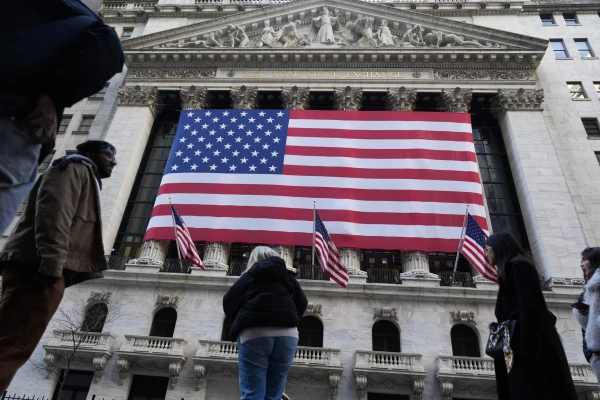
Wall Street's main stock indices initially rose but then declined, ending the day at session lows. The broad-based S&P 500 lost 0.6 percent. European equity markets also closed lower, with both London and Paris shedding more than one percent, while Asian markets finished higher.
Despite the uncertainty, some analysts noted cautious optimism in the markets.
"Oil prices remained below $100 a barrel which suggests cautious optimism that the Middle East conflict won't intensify," said Russ Mould, investment director at AJ Bell. "However, the longer oil remains in the 90s (dollar per barrel) range... the higher the chance of an inflationary shock and a wobble to global economic activity."
Early Tuesday data showed better-than-expected US March retail sales, even as energy prices began affecting consumers. Bret Kenwell, US investment analyst at eToro, commented, "The data echoes what we heard from the big banks last week, with management teams largely pointing to a resilient consumer despite soaring gas prices and a barrage of geopolitically charged headlines."
Investors also monitored confirmation hearings for Kevin Warsh, President Trump's nominee to lead the Federal Reserve, for indications on the direction of US interest rates in the coming months. The world's largest economy faces inflation risks and growth headwinds amid the geopolitical tensions.