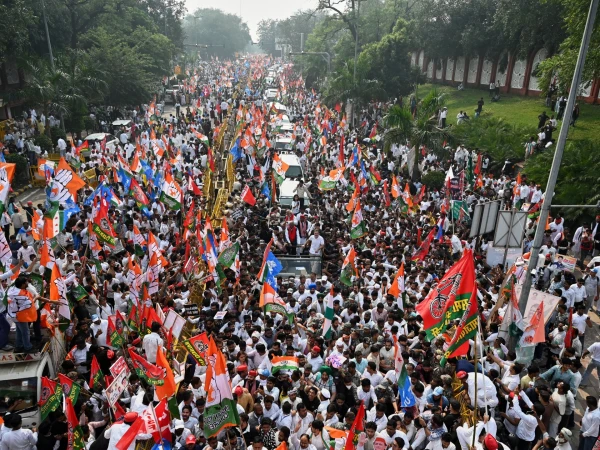
A massive wave of demonstrators flooded the streets of New Delhi on Sunday, demanding the immediate resignation of India’s top election official. Spearheaded by Indian National Congress leader Rahul Gandhi, the march is the latest escalation in a month-long standoff over sweeping alterations to the country's voter rolls, which critics argue are designed to unfairly benefit Prime Minister Narendra Modi’s ruling party.
At the heart of the outrage is an electoral revision process that struck over 130 million names from the registry. Opposition leaders claim this massive purge disproportionately targets Muslims and other minority groups who traditionally oppose Modi’s Hindu nationalist Bharatiya Janata Party (BJP).
The unrest was initially sparked when two deputies under Chief Election Commissioner Gyanesh Kumar voiced internal alarms regarding the voter list revisions, digital systems, and registration protocols. Since late September, a coalition of opposition figures, student groups, and the youth-led Cockroach Janta Party has sustained near-daily protests demanding Kumar's departure.
Electoral authorities have vehemently denied any partisan bias, maintaining that anyone mistakenly removed from the rolls is free to re-register. Meanwhile, the BJP has gone on the offensive, accusing their political rivals of sabotaging democratic institutions.
Health Minister Jagat Prakash Nadda condemned Sunday's march as a "carefully orchestrated drama."
"What is unfolding today at Ramlila Maidan is not an act of respect for democracy," Nadda told the ANI news agency. "It is a calculated conspiracy to plunge the nation into anarchy, all in the name of democracy."
To manage the surging crowds heading toward the historic Ramlila Maidan, authorities implemented strict traffic diversions and deployed hundreds of police officers equipped with riot-control vehicles, batons, and shields. Amid the heavy security presence, protesters waved political flags while opposition leaders navigated the throngs in an open-top jeep.
With India's next general election scheduled for 2029, political analysts suggest the swelling momentum behind these demonstrations represents the most significant political crisis Prime Minister Modi has faced since assuming power in 2014.