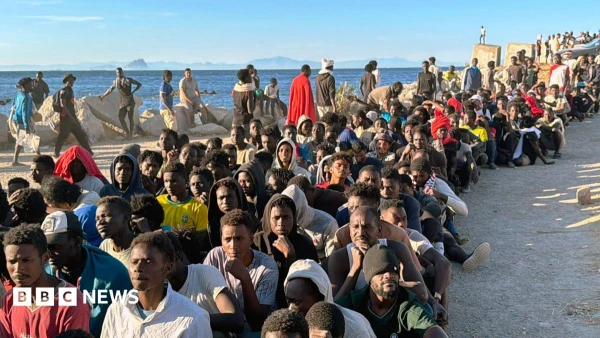
Tensions Rise Between Spain and Italy Over Migrant Influx
The ongoing migrant crisis has sparked a heated dispute between Spain and Italy, with both countries imposing border controls on air and sea travel. The move comes after Italy introduced similar restrictions last week, following an influx of approximately 78,000 migrants from Morocco into the Spanish exclave of Ceuta.
Disagreement Over Migration Rules
The crisis has pitted Spanish socialist leader Pedro Sanchez against Italian conservative leader Giorgia Meloni, who has long advocated for stricter EU migration rules. Italy's decision to suspend the border-free Schengen arrangement was intended to prevent migrants who entered Ceuta from traveling to Italy. However, Madrid has dismissed this position, arguing that it is based on 'spurious arguments' with no basis in fact.
The Italian government has stated that it will not reconsider its decision to suspend the Schengen Agreement for third-country nationals arriving from Spain, at least until August 15th, citing security and terrorist risks.
Counter-Measures and Queue Chaos
In response to Italy's restrictions, Spain has imposed passport, nationality, and visa checks for Italian passengers and visitors from other countries arriving from Italy. This move is expected to remain in place until September 7, unless the circumstances change. The introduction of these checks has resulted in long queues and waiting times at airport terminals, with passengers arriving from Spain being directed to a specific line for checks.
Underlying Causes of the Crisis
The reasons behind the massive influx of migrants into Ceuta remain unclear, but the EU's Migration Commissioner, Magnus Brunner, has suggested that criminal networks spreading disinformation may be to blame. The Spanish government has agreed with this assertion, and the situation is being closely monitored. Meanwhile, Morocco has laid blame for the crisis on a recent Spanish Supreme Court ruling that migrants stopped at sea cannot be summarily returned to Morocco.