Jensen Huang, the billionaire CEO of Nvidia, made a triumphant return to the company’s Silicon Valley headquarters this week, greeted by a thunderous standing ovation from employees who credit him with their financial success. But behind the cheers lies a web of scandals, political influence, and market forces that forced the board to reverse his abrupt resignation just 11 days earlier—despite allegations of abusive behavior, extramarital affairs, and potential ties to foreign intelligence.
Nvidia’s stock plummeted nearly 30% during Huang’s brief absence, erasing nearly $1 trillion in market value. His reinstatement triggered an immediate rebound, underscoring his indispensable role in an AI-driven economy where Nvidia’s chips power everything from data centers to cutting-edge robotics. "He’s the trillion-dollar man," one analyst remarked. "The board had no choice but to bring him back."
The reinstatement comes amid a storm of investigations into Nvidia’s operations. Federal agencies, including Congress, the Justice Department, and the Securities and Exchange Commission, are probing allegations of corporate misconduct, while intelligence reports suggest Huang engaged in multiple extramarital relationships, including one with a married executive at Nvidia and another with a woman suspected of being a Chinese spy. A closed-door congressional interview and Senate testimony are scheduled for next week.
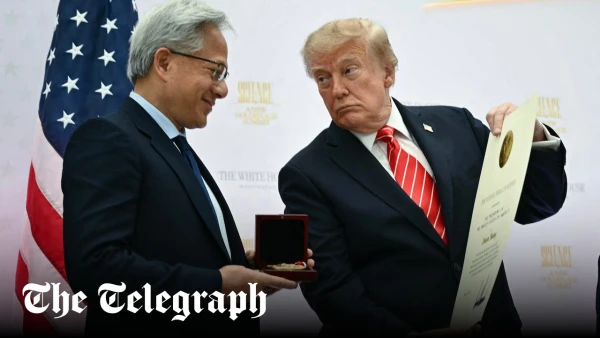
Huang’s political connections appear to have been the deciding factor. His relationship with President Donald Trump—cultivated over dinners at Mar-a-Lago and frequent phone calls—proved pivotal. When intelligence agencies flagged Huang’s alleged ties to Chinese intelligence through his romantic partner, Alice Huang, Trump dismissed the concerns. Instead, he offered Huang a seat on Air Force One for a meeting with Chinese President Xi Jinping, further shielding him from scrutiny.
The board’s reversal was swift. Just days after accepting Huang’s resignation, members unanimously voted to reinstate him under pressure from Trump, who argued that Nvidia’s performance was too critical to the global economy to risk instability. "The board’s job isn’t to be the morality police," one insider said. "It’s to make the stock price go up—and no one does that better than Huang."
Huang’s influence extends far beyond Nvidia’s boardroom. His strategic foresight has positioned the company at the heart of the AI revolution, with Nvidia’s chips embedded in humanoid robots and data centers worldwide. Colleagues describe him as a visionary—equal parts ruthless operator, charismatic leader, and meticulous engineer who can sketch GPU diagrams from memory. Yet his management style has left a trail of controversy, from alleged threats against employees to reports of ritual humiliation in meetings.
The reinstatement also highlights the growing power of retail investors, many of whom view Nvidia as a surefire bet regardless of its corporate governance. One anecdote from a clay-shooting range in North Carolina illustrates the phenomenon: a fellow shooter proudly displayed his Robinhood portfolio, boasting of Nvidia trades while admitting he barely understood what the company actually produced.
But the decision raises serious questions about accountability. Nvidia’s alleged circumvention of U.S. export restrictions—by funneling advanced chips to Southeast Asian partners who resold them to China—has drawn scrutiny. Investigators allege that preferred customers like Alan Wei Zhaolun, a Singapore-based partner, profited from diverted shipments, with some facing charges of money laundering and fraud. Alice Huang, Huang’s former romantic partner and a Nvidia cloud partner, was questioned by Singaporean authorities and later banned from the country, with U.S. intelligence suggesting her company facilitated chip transfers to China.
As Huang prepares to face lawmakers, the reinstatement underscores a troubling reality: in an economy increasingly dependent on AI, the line between corporate success and ethical compromise is blurring. For now, the board’s calculus is simple—keep Huang, keep the stock soaring, and hope the scandals fade into the background.