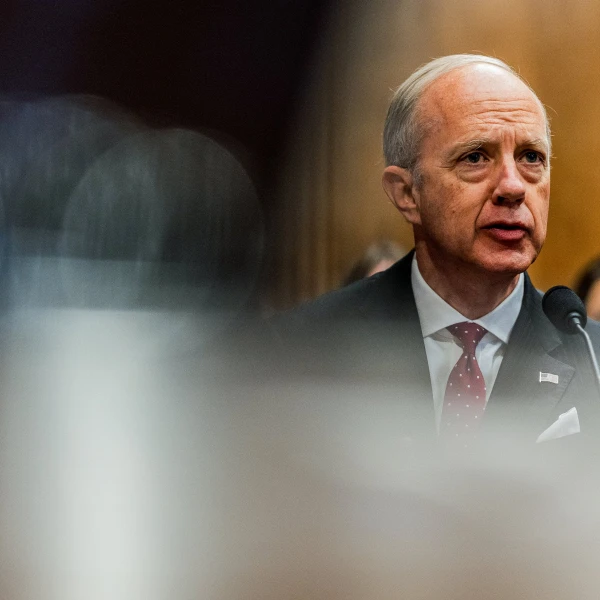
The U.S. Senate faces a pivotal decision this week as it considers a controversial nomination from former President Donald Trump, whose pick for a critical oversight role has raised serious questions about impartiality and potential conflicts of interest.
Legal experts and bipartisan lawmakers warn that confirming the nominee without thorough scrutiny could undermine public trust in the oversight body, which plays a vital role in holding government agencies accountable. The position, which requires independence from political influence, is now at the center of a growing debate over whether loyalty to the former president should outweigh the need for an unbiased watchdog.
"This is not about partisan politics—it’s about the integrity of the institution," said Senator Elizabeth Warren, a Democrat from Massachusetts. "We cannot afford to install a nominee who may prioritize personal or political allegiances over the public interest."
The nomination has drawn sharp criticism from ethics groups, who argue that the candidate’s past financial ties and public statements in support of Trump could compromise their ability to perform the role fairly. A coalition of watchdog organizations has called on the Senate to reject the appointment unless the nominee undergoes a rigorous vetting process.
Republicans, however, have largely defended the nomination, framing it as a necessary step to restore conservative influence in federal oversight agencies. Senator Mitch McConnell, the minority leader, dismissed concerns as "overblown," stating that the nominee’s qualifications are sufficient to meet the demands of the role.
As the Senate prepares to vote, the outcome hinges on whether lawmakers can set aside political divisions long enough to address the fundamental issue: Can an institution designed to check power truly function when its leader is seen as an extension of the very administration it’s meant to oversee?
The answer may define not just the future of this oversight body, but the broader principle of institutional independence in American governance.