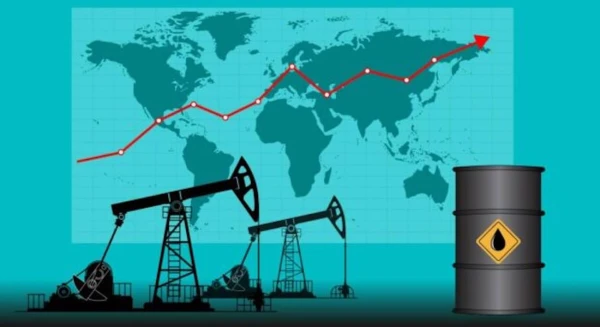
LONDON, United Kingdom — Oil prices edged higher on Wednesday, defying expectations as a U.S.-Iran ceasefire extension failed to calm market jitters. European stock markets dipped amid ongoing uncertainty over Middle East peace talks, while Asian equities traded mixed as investors awaited clearer signals.
Brent North Sea crude approached $100 per barrel, with West Texas Intermediate trading above $90, reflecting persistent concerns about the energy squeeze's impact on the global economy. "The ceasefire extension hasn't done much to calm nerves," noted Susannah Streeter, chief investment strategist at Wealth Club. "Worries remain about the prolonged energy crisis and its economic fallout."
Tensions escalated as Iranian gunboats reportedly attacked at least one container ship in the Strait of Hormuz on Wednesday, despite the extended ceasefire. The strait, a critical chokepoint for global oil shipments, has been largely shut for seven weeks following U.S. and Israeli attacks on Iran, driving energy prices higher and threatening worldwide economic growth.
"Shipments from the Middle East are in limbo, and a resolution to the conflict remains elusive—the price of Brent crude reflects this," Streeter added.
U.S. President Donald Trump stated that the blockade of Iran's ports would continue as Pakistani mediators attempt to revive dialogue. Analysts suggest both sides may be maneuvering for leverage. "The U.S. and Iran could be playing a game of who blinks first," said Christopher Wong, a strategist at Oversea-Chinese Banking Corp. "The suspense may curb risk appetite in the interim."
Meanwhile, investors monitored the confirmation hearing for Kevin Warsh, Trump's nominee to replace Federal Reserve Chair Jerome Powell. Warsh assured lawmakers he would maintain central bank independence, addressing concerns after Trump's public criticism of Powell's interest rate policies.
In Britain, annual inflation surged to 3.3 percent in March, attributed largely to soaring oil and gas prices amid the Middle East conflict. The data underscores the war's broader economic ripple effects, as markets brace for further volatility.