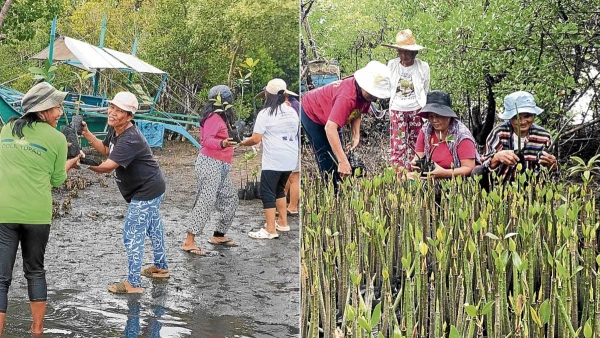
As Earth Month unfolds in the Philippines, a powerful movement is taking root in the Sierra Madre mountains, where women are emerging as frontline leaders in biodiversity conservation. The Haribon Foundation is championing this shift, advocating for greater gender inclusion in environmental decision-making processes nationwide.
"Let's value the next generation, because we have children, we have grandchildren. Teach them about our environment, and that they too must value it," shared community leader Beatriz Leynes.
The momentum builds from the recent Women's Forum 2026, where 111 participants gathered to explore the intersection of gender equity and biodiversity protection. A key outcome was the introduction of the GEDSI (Gender Equality, Disability, and Social Inclusion) Toolkit, designed to ensure inclusive approaches to conservation that leave no one behind.
At the heart of this transformation are women from the KALIPI Real Federation in Northern Quezon, whose commitment stems from personal tragedy. Many still carry memories of 2004's devastating Typhoon "Winnie," which destroyed their communities with floating logs and infrastructure damage. Today, these women have transformed from survivors to leaders, spearheading mangrove plantings, community cleanups, and governance initiatives.
Helen Siat of KALIPI Kiloloron captures their spirit: "When we do our work with passion, we will not get tired even when it is difficult. We will not grow weary, instead we experience hope and joy."
Despite their critical contributions, women remain significantly underrepresented in formal environmental leadership globally, with only 15 percent of government environmental agencies led by women. Haribon Chair Marianne Quebral emphasized at the forum that "the path to a biodiverse future must be paved with social equity."
To sustain this progress, Haribon calls for three key actions: investing in Biodiversity-Friendly Enterprises to make conservation economically viable, funding technical capacity-building for women in restoration work, and ensuring women's inclusion in formal environmental governance structures.
As Rhea Castillo of KALIPI Ungos observed, "This is the start of a seed of hope that grows and flourishes for other women out there." The movement represents not just environmental protection, but a fundamental shift toward more inclusive and effective conservation strategies across the Philippines.