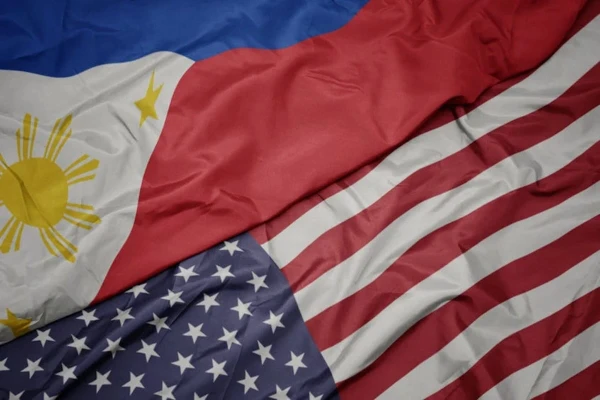
In a landmark move to strengthen economic and security ties, the Philippines and the United States have announced plans to establish a pioneering industrial zone in Luzon's western corridor. This initiative, described as "historic" and "the first of its kind" by the US Department of State, aims to secure critical inputs for American and global supply chains.
The 1,619-hectare site will be designated by the Philippines as an Economic Security Zone (ESZ), strategically located within the Luzon Economic Corridor. This corridor spans central and northern Luzon, encompassing key areas such as Metro Manila, Batangas province, the Clark airport and business hub in Pampanga, and Subic Bay in Zambales.
US Undersecretary of State for Economic Affairs Jacob Helberg emphasized the zone's significance, stating it represents a "new model for AI-native investment acceleration hubs" under the Pax Silica initiative. Pax Silica is a global effort to establish resilient supply chains for artificial intelligence, semiconductors, critical minerals, and other strategic technologies, linking economic activity with national security priorities.
In a related development, the Philippines has officially joined Pax Silica as its 13th member nation. Trade Undersecretary Ceferino Rodolfo signed the declaration, aligning the country with other members including Australia, Japan, South Korea, Singapore, and the United Kingdom.
The US Department of State highlighted the Philippines' valuable contributions to the alliance, noting the country's "key capabilities and human talent in technology manufacturing, including semiconductors and electronics." Additionally, the Philippines possesses significant reserves of nickel, copper, chromite, and cobalt—minerals increasingly vital to global industries.
The US embassy in Manila stated that the ESZ will provide the Philippines with comparative advantages and support the evolving needs of the Pax Silica network. It will serve as a "platform for allied manufacturing," leveraging the country's geographic centrality in the Indo-Pacific, its young and technically skilled workforce, and its deepening alliance with the United States.
This collaboration marks a significant step in integrating economic development with strategic security objectives, positioning the Philippines as a key player in global supply chain resilience and technological advancement.