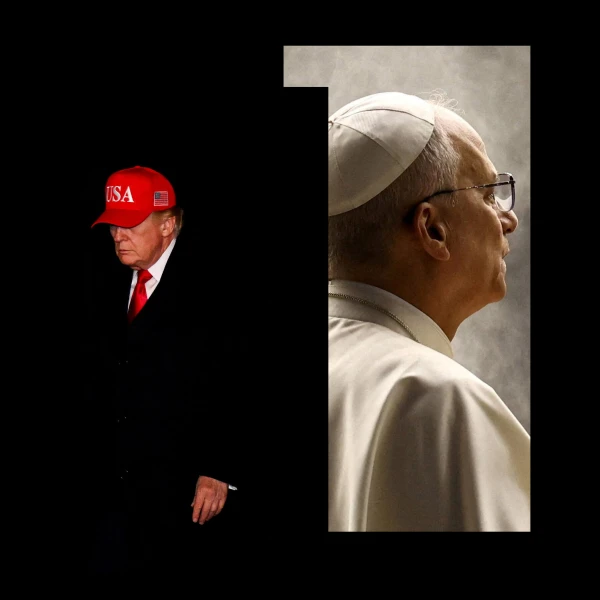
In a powerful address that resonated across political and environmental circles, Pope Francis delivered a pointed critique of global leaders who prioritize short-term economic gains over the planet's future. Speaking from the Vatican, the pontiff emphasized that climate change represents "one of the most urgent moral challenges of our time" and called for immediate, collective action.
"We cannot continue to ignore the cries of the Earth and the poor who suffer most from environmental degradation," Francis declared during his weekly audience. "Those in positions of power have a sacred responsibility to protect our common home for future generations."
The Pope's remarks come amid growing international tension over climate policy implementation. While not naming specific individuals, his criticism was widely interpreted as directed at political figures who have rolled back environmental protections or questioned established climate science.
Environmental advocates welcomed the intervention. "When religious leaders speak with moral authority on climate issues, it transcends political divisions and reminds us of our shared humanity," said Dr. Elena Rossi, director of the Global Climate Ethics Institute.
Francis outlined three key principles for addressing the crisis:
- Intergenerational justice - Considering the impact of today's decisions on future generations
- Precautionary action - Taking measures even amid scientific uncertainty
- Global solidarity - Wealthier nations assisting vulnerable communities
"The time for debate has passed," the Pope concluded. "Now is the moment for courageous leadership and concrete action before it's too late."