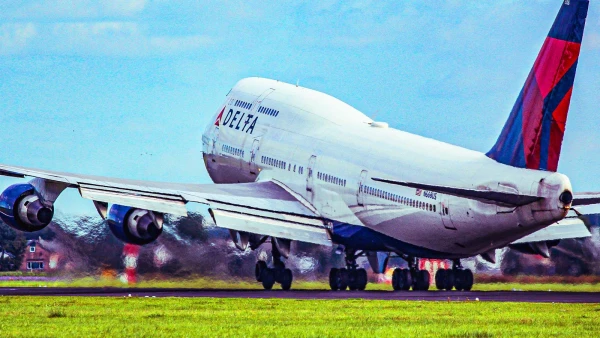
Global airlines are undergoing a seismic shift in operations, driven by an insatiable appetite for premium airfare that has rewritten the rules of cabin design, fleet investments, and airport experiences. The tipping point came when Delta Air Lines revealed a historic milestone: in the fourth quarter of 2025, the carrier generated more revenue from premium-cabin sales than from its main cabin fares for the first time. The revelation sent shockwaves through the industry, prompting legacy carriers to abandon their once-reliant Basic Economy models in favor of a laser-focused pursuit of high-spending travelers.
The End of Basic Economy: Airlines Chase the 30% Who Drive Half the Revenue
American Airlines CEO Robert Isom recently admitted that the airline’s reliance on Basic Economy tickets was a miscalculation. Speaking at the Morgan Stanley Laguna Conference, Isom acknowledged that just 30% of seats—those in premium cabins—account for half of the airline’s revenue. "Those 30% of seats, they're only going to grow in our fleet," Isom stated. "That's demand that's more likely to hold up through economic uncertainty." In response, American Airlines has begun phasing out perks like elite upgrades and frequent-flyer miles for Basic Economy tickets purchased after mid-May, redirecting passengers toward higher-priced rows. The airline also announced the retirement of its Flagship First service in March 2027, a move that will expand narrowbody premium seating to 40% of its fleet.
Delta Air Lines, meanwhile, has made premium revenue its top priority. CEO Ed Bastian confirmed that nearly all new seat growth is now directed toward business class and premium economy passengers. The airline’s strategy reflects a broader industry trend, with North America and Asia leading the charge in tearing out economy rows to make way for sprawling business suites, satellite WiFi, and exclusive lounges.
Narrowbody Luxury Takes Flight: Lie-Flat Beds on Smaller Jets
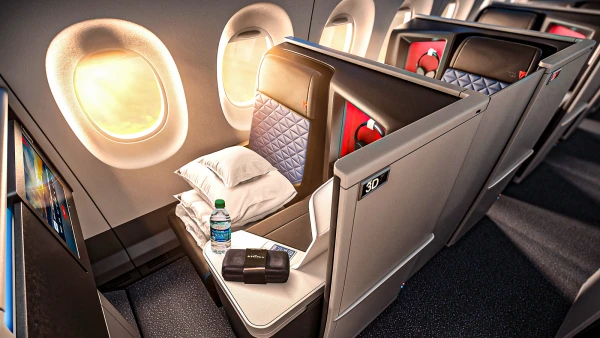
The push for premium dominance has extended beyond widebody aircraft, with airlines now equipping narrowbody jets with lie-flat beds to cater to corporate travelers. Air Canada led the charge in June by introducing its first Airbus A321XLR flights between Montreal and Toronto, complete with lie-flat suites on transatlantic routes. The airline has since deployed the A321XLR to Toulouse, signaling a new era of long-haul comfort on smaller aircraft. Alaska and Hawaiian Airlines are following suit, with plans to launch lie-flat suites on Boeing 737 MAX 10 aircraft and upgraded Airbus A330-200s starting in 2028.
This shift allows carriers to serve niche international markets profitably while avoiding the fuel costs associated with widebody jets. The strategy is already yielding results: Air Canada’s relocation of Boeing 737 MAX 8 jets to its leisure-focused Rouge subsidiary and the reinstatement of Airbus A320-200 and A321-200 aircraft to regular service underscore the airline’s commitment to premium travelers.
The Trade-Off: Luxury Comes at the Cost of Economy Comfort
The relentless expansion of premium cabins has forced airlines to make uncomfortable compromises in economy class. Singapore Airlines faced backlash after retrofitting its A350-900s with older economy seats that lack 4K screens or Bluetooth audio. The airline is also tightening standard economy seating on its incoming Boeing 777-9 deliveries, reducing the number of seats per row from nine to ten abreast—a move that sacrifices long-praised coach comfort to fund upfront luxury.
The table below highlights the stark differences in premium and economy seating across major carriers:
| Carrier | Premium Aircraft | Total Seats | First/Business Class | Premium Economy | Economy |
|---|---|---|---|---|---|
| United Airlines | 787-9 Elevated | 222 | 64 Polaris (8 Studio) | 35 Premium Plus | 123 (39–48 Economy Plus) |
| Delta Air Lines | A321neo (Interim) | 164 | 44 Domestic First | 54 Comfort+ | 66 Main Cabin |
| American Airlines | 777-300ER Olympus | 330 | 70 Flagship Suites (0 First) | 44 Premium Economy | 216 (30 Main Cabin Extra) |
| Emirates | 777-300ER (4-Class Retrofit) | 324–332 | 6–8 First / 38–40 Business | 24 Premium Economy | 256–260 Economy |
| Singapore Airlines | A350-900ULR (Retrofit) | 132 | 4 First / 70 Business | 58 Premium Economy | — |
| Air Canada | A321-200XLR | 182 | 14 Signature Suites | — | 168 Economy |
Ground Game: Lounges, WiFi, and the Battle for Premium Traveler Loyalty
The competition for premium travelers extends beyond the cabin, with airlines and credit card issuers investing heavily in ground experiences. Alaska Airlines CEO Ben Minicucci emphasized the importance of a seamless journey, stating, "We believe premium is more than a seat. It's how guests feel from the moment they book their trip to the moment they arrive at the airport to when they're in the air with us."
To woo top-tier international ticket holders, Air Canada has opened a seventh grab-and-go café in Québec City and offers apron Porsche transfers from its Signature Suites. Meanwhile, high-speed satellite internet has become a critical amenity for premium bookings. United Airlines leads the pack with 640 SpaceX Starlink-equipped aircraft, while Emirates has prioritized raw bandwidth by mounting twin fuselage antennas on its Boeing 777-300ERs and tripling the number on its Airbus A380-800s, enabling hundreds of passengers to stream simultaneously at speeds exceeding 2 gigabits per second.
The Lounges Are Full: Banks and Airlines Tighten Access
The surge in premium demand has led to overcrowded lounges, prompting banks and airlines to tighten access rules. Capital One recently stopped offering free guest and authorized user access on its Venture X card, now charging $45 per adult guest unless the member spends $75,000 annually. The move came just days after Capital A opened a 12,500-square-foot facility at LaGuardia Airport, featuring faster table turnover and custom-made tapas.
United and American Airlines have responded with ambitious hub expansions. United recently completed a 40,000-square-foot, 650-seat United Club in Washington Dulles Concourse E, while American Airlines reopened its Los Angeles Flagship First Dining room and introduced a quick-service coffee and snack counter at New York’s JFK Terminal 8.
The Next Frontier: Terminal Expansions and the Future of Premium Travel
The next major test for airline ground operations will arrive between late 2027 and 2028, when Southwest’s Icon Lounges, Alaska’s two-tier Seattle complex, and Hawaiian’s Honolulu flagship open their doors. These expansions promise to add thousands of square feet of terminal space, but their success hinges on whether airlines and credit card issuers can maintain strict access rules to prevent overcrowding. Tracking these developments will offer a glimpse into the next phase of competition in the terminal—and the evolving expectations of premium travelers.