Europe's Summer of Devastation
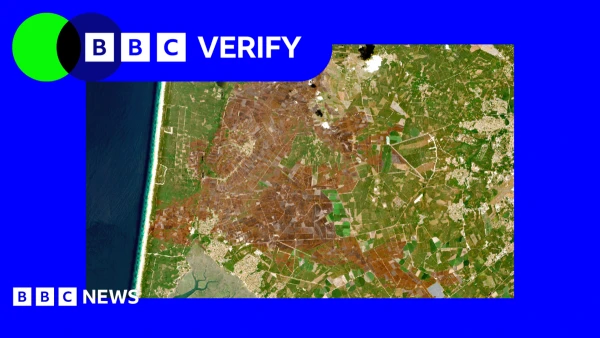
The effects of this summer's extreme temperatures on western Europe are starkly visible from space, with satellite images revealing the devastating impact of successive heatwaves since May.
Shrunken glaciers, scorched areas left by wildfires, and arid fields have replaced the region's once-lush green landscapes. Even iconic landmarks, such as the Palace of Versailles, have been affected, surrounded by brown fields in the latest images.
Rivers at Historic Lows
The Danube, Europe's second-longest river, has dropped to its lowest levels in 30 years, exposing unusual sights such as the bones of a mammoth in Bulgaria and a sunken WW2 warship in Serbia. Nuclear power stations in Hungary and Romania have been forced to shut down or run at reduced capacity due to the inability to use river water for cooling.
Glaciers in Retreat
The Alps, typically synonymous with snow-capped peaks, have not been immune to the heat. This summer is on track to become one of the worst ever recorded for melting Alpine glaciers, with more than a month of the season still to go. Satellite imagery shows that the front of Rhône Glacier in Switzerland has retreated by 50m or more since the same time last year.
"In a stable climate, glaciers would be expected to remain more or less the same size over the long-term," says Dr. Lander van Tricht, glaciologist at the Swiss Federal Institute of Technology. "And if we continue this trend, then the future looks very dramatic for the Alps."
Wildfires Leave Lasting Scars
Wildfires have also transformed parts of western Europe, with over 90,000 hectares burned in France, making this its worst year on record. The largest fire in the Gironde region burned about 42,000 hectares of land, roughly equivalent in size to the Isle of Wight.
According to Dr. Douglas Kelley of the UK Centre for Ecology and Hydrology, extreme wildfires are becoming more frequent as climate change creates ideal conditions, with higher temperatures drying out vegetation and soils faster. Satellite imagery shows a striking increase in the browning of land compared to last year, with the Normalised Difference Vegetation Index (NDVI) indicating widespread water stress.