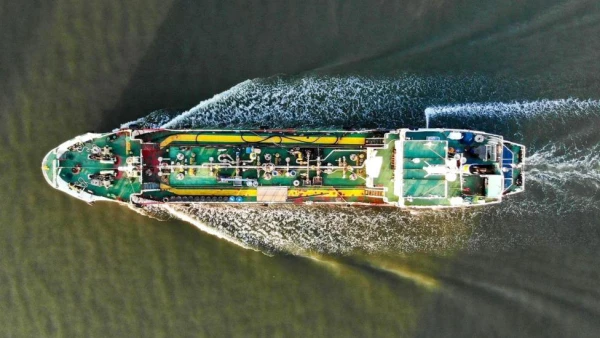
After six weeks of maritime gridlock in the Strait of Hormuz, an overnight ceasefire has brought immediate economic relief, though significant questions remain about long-term consequences.
Approximately 800 vessels were stranded in the Gulf during the conflict, creating what became the world's largest shipping traffic jam. These ships—many carrying oil, gas, and critical petrochemicals—were unable to navigate the strategic waterway, triggering a chain reaction of rising fuel prices, increased airfares, and climbing mortgage rates worldwide.
Markets responded swiftly to the ceasefire announcement, with oil and gas prices dropping 15% and stock markets rallying. The immediate financial impact has been substantial:
"The five-year gilt rate fell the equivalent of a quarter-percent rate cut," noted market analysts, adding that "this ceasefire will help pause the notable rise in fixed mortgage rates."
However, the physical and diplomatic realities in the Strait present ongoing challenges. While U.S. officials suggest traffic will flow freely, Iran's Foreign Minister indicates passage will occur "via coordination with Iran's Armed Forces and with due considerations to technical limitations."
This coordination raises fundamental questions about the new power dynamics. During the conflict, Iran demonstrated unprecedented control over the critical maritime chokepoint—without deploying its navy or air force—and even began collecting transit fees. The suggestion that Iran will now jointly coordinate Strait control with Oman represents a significant geopolitical shift.
Energy markets face particular uncertainty. Global gas production will likely remain depressed for years following infrastructure damage, primarily in Qatar. Restarting production will take weeks, with full recovery to pre-war capacity requiring years.
Europe faces a delicate balancing act as it attempts to refill natural gas stocks before winter. A sustained flow of liquefied natural gas tankers from the Gulf through summer will be crucial to containing energy bill increases.
The economic implications extend beyond immediate price fluctuations. Before the ceasefire, oil prices threatened to reach $200 per barrel with cascading inflationary effects. Now, analysts see a potential pathway back to $60-$70 per barrel, which could mean contained inflation, lower fuel prices, and more stable interest rates.
Yet the fundamental question remains: Has Iran permanently transformed the Strait of Hormuz into what one observer called "the world's most lucrative toll booth"? The conflict has established Iran's economic leverage in one of the world's most critical trade arteries, with ships potentially facing million-dollar transit fees.
As finance ministers gather in Washington for IMF meetings, the ceasefire provides welcome breathing room for the global economy. But the deeper scars—on energy security, maritime control, and long-term economic stability—will take far longer to heal.