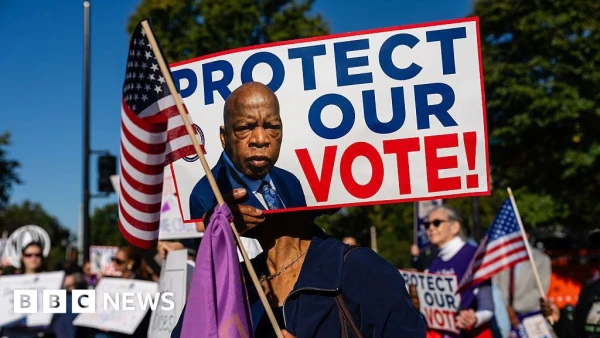
The U.S. Supreme Court has limited how states may consider race when drawing electoral maps, a decision with far-reaching implications for political representation in the South. In a 6-3 ruling along ideological lines, the conservative majority sided with voters challenging Louisiana's congressional districts, which were redrawn to comply with the Voting Rights Act's protections against racial discrimination.
Justice Samuel Alito, writing for the majority, argued that previous interpretations of the law sometimes forced states to engage in unconstitutional race-based discrimination. The court stopped short of striking down the Voting Rights Act provision entirely, but made it significantly harder to prove that a map illegally dilutes minority voting power. Challengers must now show that lawmakers intentionally drew districts to limit minority electoral opportunities.
"The court's decision will set back the foundational right Congress granted of racial equality in electoral opportunity," wrote Justice Elena Kagan in her dissent.
The ruling comes amid fierce partisan battles over redistricting. The White House praised the decision as a "complete and total victory for American voters," with a spokesperson stating that "the color of one's skin should not dictate which congressional district you belong in."
Florida, currently redrawing its maps to bolster Republican House seats, could gain advantage from the ruling. Other GOP-led states like Tennessee and Mississippi may follow suit, potentially reshaping the political landscape ahead of the next election cycle.