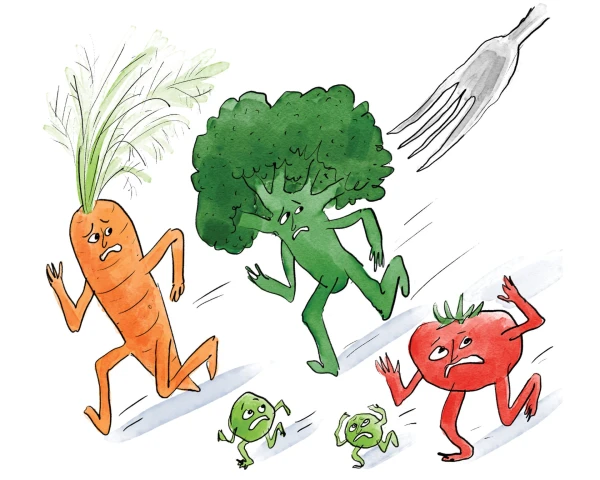
The idea that we should eat 30 different plants a week has become a popular health mantra, but the science behind it is far from settled. The claim originates from a 2018 study involving over 10,000 participants in the US, UK, and Australia, which found that those who consumed more than 30 plant foods per week had a more diverse gut microbiome than those who ate fewer than 10. However, experts caution that 30 is not a magic number.
"Thirty is pretty arbitrary," says Prof Daniel M Davis, head of life sciences at Imperial College London and author of Immune Health: A Myth-Busting Guide. "It's not as though researchers compared 10 plants, 20 plants, 30 plants and 35 plants and found a clear cut-off point."
Moreover, the study does not prove that eating 30 plants directly improves health. While a diverse microbiome has been linked to lower disease risk, scientists still don't know exactly what a "healthy" microbiome looks like. "People eating more than 30 plants a week are probably doing a gazillion other things differently as well," says Davis, pointing out that exercise, sleep, and stress also affect our microbiome.
Davis warns against those using the "30 plants" message to make money. The idea has fueled a market for expensive supplements promising to help hit the target, but there's little independent evidence they work. "It hasn't been proven that reaching 30 plants a week will prevent illness or lead to specific health benefits," Davis says. "What we do know is that eating a variety of fruits, vegetables, legumes, nuts and wholegrains is generally good for you."