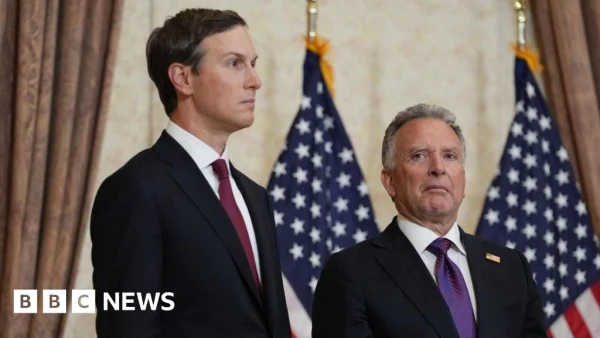
US President Donald Trump's special envoy Steve Witkoff and his son-in-law Jared Kushner are heading to Pakistan on Saturday morning for peace talks with Iran, the White House has confirmed. The move comes as both sides signal a willingness to negotiate, despite ongoing hostilities and mixed public statements.
White House press secretary Karoline Leavitt announced the trip, saying, "The Iranians want to talk." She added that Vice-President JD Vance remains "on standby" to join if the talks show progress. However, Iran's foreign ministry spokesman Esmail Baqaei stated that Foreign Minister Abbas Araghchi would meet with Pakistani officials but stressed that "no meeting is planned to take place between Iran and the US." Instead, "Iran's observations would be conveyed to Pakistan."
US Defense Secretary Pete Hegseth emphasized that Tehran has an opportunity to reach a "good deal" by abandoning its nuclear ambitions in a verifiable manner. He also warned that Washington's blockade of the Strait of Hormuz—a critical oil route—is "growing and going global." The US and Israel began attacks on Iran on February 28, prompting Tehran to restrict shipping through the strait. These actions have driven oil prices sharply higher worldwide.
Leavitt noted that Trump sent Witkoff and Kushner to "hear the Iranians out," as the president is "always willing to give diplomacy a chance." She cited "some progress from the Iranian side in the last couple of days."
Despite Trump and Hegseth insisting the US is not pressured to end the war, the ongoing talks reveal a divide between public rhetoric and behind-the-scenes efforts to de-escalate. Both sides appear to seek a path forward, though major breakthroughs remain uncertain.
JD Vance led the US delegation in earlier talks this month but is not confirmed for this round, suggesting neither side expects a quick deal. Iran's parliamentary speaker Mohammad Bagher Ghalibaf warned that reopening the Strait of Hormuz is "not possible" due to US and Israeli ceasefire violations, including a naval blockade he called a "hostage-taking" of the global economy. Iranian President Masoud Pezeshkian reiterated openness to negotiations but cited breaches, blockades, and threats as obstacles.
On Friday, the US Treasury imposed sanctions on a Chinese refinery and 40 other targets, including vessels and their owners, targeting Iran's illicit oil trade. Separately, Israel and Hezbollah accused each other of ceasefire violations, after Trump extended the Israel-Lebanon truce by three weeks.