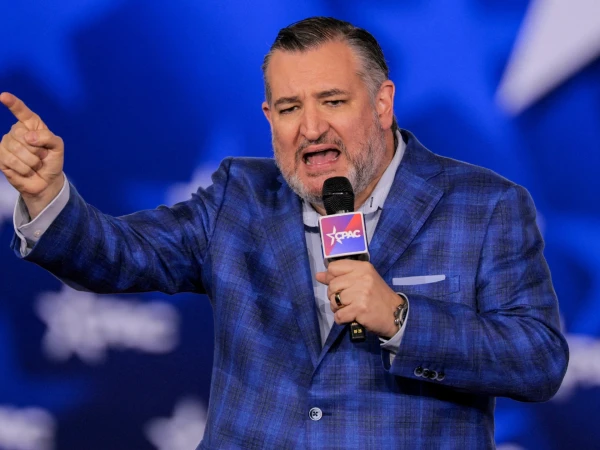
Washington, DC – A few months ago, it would have been unthinkable for a mainstream US politician — let alone a Republican senator — to acknowledge Iran’s right to self-defence. But on Wednesday, Senator Roger Marshall did exactly that, telling CNN, “I think that they have to be able to defend themselves.”
Analysts say such statements signal shifting attitudes in the US. This week, after President Donald Trump agreed to a memorandum of understanding (MoU) with Iran, some Republicans appear to have tempered their hawkishness. Still, many pro-Israel groups and politicians are mobilizing against the deal, setting up a potential clash with the White House and those seeking a swift end to the US-Israel war with Iran.
“Donald Trump can sell pretty much anything to his hardcore base,” said Matthew Duss, executive vice president at the Center for International Policy. “If he says the Iran war is going great one day and then reverses himself completely and says we’re signing a deal to end the war the next day, a big part of his base will just go along with it, and they will get angry at anyone who publicly disagrees.” Duss stressed that pro-Israel groups and politicians are still “very upset” with the memorandum.
An Unpopular War
The terms of the deal have trickled out since last Thursday, when Trump first teased that the “final points” of a ceasefire had been “approved by all parties.” Only on Wednesday did the memorandum’s 14 points become public. The gradual rollout has only partly shielded the memo from hawkish criticism; another factor is that Republicans are largely reluctant to cross Trump, who has a track record of confronting dissidents within the party.
Even some of the most vocal pro-Israel hawks have refrained from attacking Trump since the terms were announced. Senator Lindsey Graham, an ardent cheerleader for the war, said the memorandum “will be beneficial” for the US. “Whether or not the United States can reach an acceptable, verifiable deal with Iran regarding its nuclear program and other issues is yet to be determined, but I see little downside to trying,” Graham posted on social media on Wednesday.
Overall, Republicans have been far more tolerant of this initial agreement than of the 2015 nuclear deal signed by President Barack Obama. Unlike the Joint Comprehensive Plan of Action (JCPOA), the current memorandum aims to resolve an active war. The US and Israel started bombing Iran on February 28 without direct provocation. Public opinion polls have underscored widespread US disapproval of the conflict, which has boosted the case for diplomacy in some conservative sectors.
The fighting saw Iran close the Strait of Hormuz, sending global oil prices soaring. In the US, that has fueled inflation and economic uncertainty, factors that could weigh on Republican prospects in the upcoming midterm elections. “We’ve seen the cost of war. We’ve seen that war is not an easy solution. It has major economic impacts on Americans, and Americans are opposed to it,” said Ryan Costello, policy director at the National Iranian American Council (NIAC).
Inside the Memorandum
The memo, signed on Wednesday, dictates a regional ceasefire to end the war, mandating that fighting stop not only in Iran but in Lebanon as well. The deal will see Iran reopen the Strait of Hormuz and the US lift its siege against the country. Tehran also reiterated its long-standing position that it will not pursue nuclear weapons.
In exchange, Iran will receive some economic relief. The US is set to lift sanctions on Iran’s energy exports, which will increase global supply and help bring down oil prices. Iran will also see the release of billions of dollars of its own assets frozen by sanctions, though the memorandum does not provide a specific timeline or mechanism for freeing the funds. It does, however, promise a $300 billion investment and reconstruction fund for Iran.
The preliminary deal does not resolve the thorny issue of whether Iran’s uranium enrichment programme will be allowed to continue. That is slated for future talks over the next 60 days. It also does not mention Tehran’s missile programme, one of the stated reasons for the US-Israel war against the country. Limiting Iran’s missile capacity has been a key goal for Israel for years, but Tehran has ruled out any concessions.
On Wednesday, Trump said “missiles aren’t the problem” and suggested the issue could be addressed as part of regional security talks. “What am I going to do? Am I going to let Saudi Arabia have missiles, but they [Iran] can’t have them? It doesn’t work that way,” he told reporters. But previously, Trump had advocated for limiting Iran’s arsenal. Costello said Trump’s sudden shift is disorienting: “President Trump last week was sounding more like John Bolton. Then, this week, he is sounding more like John Mearsheimer.”