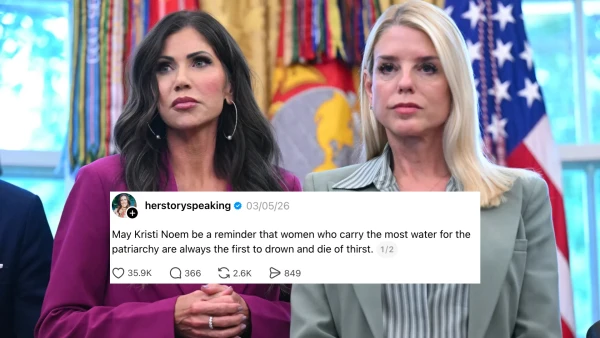
Recent dismissals of prominent women from Donald Trump's political orbit have reignited discussions about the 'glass cliff' phenomenon—a pattern where women are appointed to leadership positions during times of crisis, only to face heightened scrutiny and higher failure rates.
Political analysts point to the recent firings of former Florida Attorney General Pam Bondi and South Dakota Governor Kristi Noem as textbook examples. Both women were brought into Trump's inner circle during turbulent periods, tasked with managing controversial initiatives or defending contentious positions.
"Women in Trump's world are often placed in precarious positions from the start," explains Dr. Eleanor Vance, a political sociologist at Georgetown University. "They're given assignments with high visibility but low institutional support, making success difficult and failure almost predictable."
Research on the glass cliff phenomenon, first identified in corporate settings, shows that women and minorities are disproportionately appointed to leadership roles during organizational crises. These positions typically come with greater challenges, less support, and higher expectations for immediate results.
"When women are set up to fail from the beginning, their subsequent dismissal reinforces harmful stereotypes about women's leadership capabilities," notes Dr. Marcus Chen, who studies gender dynamics in politics. "It creates a vicious cycle where each failure makes organizations more reluctant to appoint women to stable leadership positions."
Current and former members of Trump's political network are reportedly taking note of the pattern. Several women who have worked with the former president describe feeling pressure to deliver exceptional results while navigating complex political dynamics with limited resources.
"The lesson for women in high-stakes political environments is clear," says veteran political strategist Angela Rodriguez. "They need to negotiate for real authority and resources from day one, not just a title. Otherwise, they risk becoming another statistic in the glass cliff narrative."
As the 2024 election cycle approaches, observers will be watching whether Trump and other political leaders change their approach to appointing women to key positions—or whether the glass cliff pattern continues to define women's experiences in American politics.
Experts suggest that breaking this cycle requires both individual negotiation strategies and systemic changes in how political organizations evaluate and support diverse leadership.