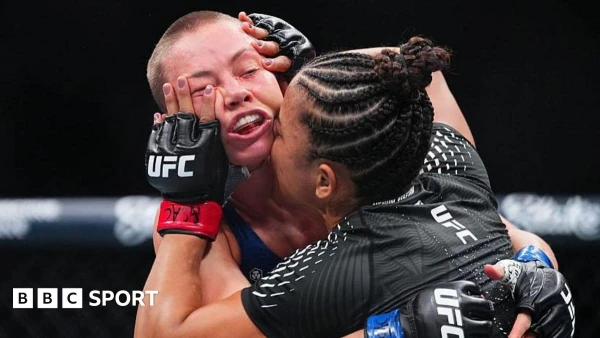
Former UFC strawweight champion Rose Namajunas has issued a strong call for the Ultimate Fighting Championship to implement stricter penalties for eye pokes, advocating for immediate financial consequences even for accidental incidents.
Namajunas, 33, recently announced she has been medically cleared to resume training three months after undergoing surgery to repair eye damage sustained during her January bout against Natalia Silva at UFC 324. The American fighter revealed that Silva's repeated eye pokes during the contest necessitated surgical intervention involving a silicone tube to correct the injury.
In a social media statement on Monday, Namajunas declared herself "finally healthy" while proposing a new approach to eye safety in the octagon.
"I'm a bit out of shape, but I'm cleared to train now," Namajunas posted. "I really hope eye pokes will be taken more seriously in the future. I propose instant purse deduction even for an accident. An accident that could seriously affect a fighter's health long-term. Anyways, I'm just grateful that it was not more serious."
Her comments come amid growing concern about eye injuries in mixed martial arts. Currently, referees typically issue multiple warnings before considering point deductions for eye pokes, a system that veteran MMA official Herb Dean defended in November, noting existing rules already allow for penalties.
The issue gained prominence in October when UFC heavyweight champion Tom Aspinall's title defense against Ciryl Gane ended prematurely after Gane accidentally poked Aspinall in the eyes late in the first round, resulting in a no-contest ruling. Aspinall was subsequently diagnosed with a rare eye condition and underwent surgery in February, with his return to competition still pending.
Namajunas, a two-time UFC strawweight champion who recently moved to the flyweight division, emphasized that the potential long-term health consequences of eye injuries warrant more serious deterrents, regardless of intent. Her proposal for automatic financial penalties marks a significant escalation in the ongoing conversation about fighter safety protocols within the sport.