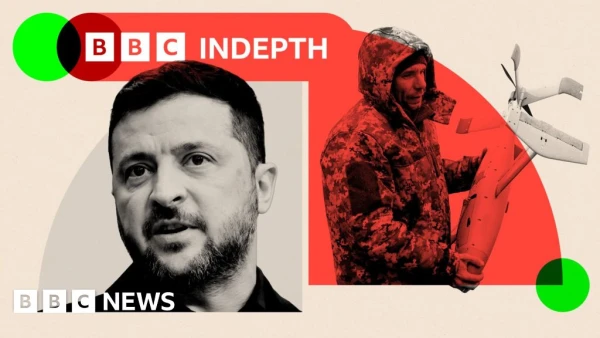
President Volodymyr Zelensky has leveraged the Iran war to bolster Ukraine's position ahead of potential peace negotiations with Russia, securing drone technology deals with Gulf states and learning critical battlefield tactics.
In March, Zelensky visited Saudi Arabia to showcase Ukraine's expertise in drone warfare, a skill honed during Russia's invasion. Kyiv has since signed agreements with Saudi Arabia, the UAE, and Qatar to share drone technology, tightening alliances with wealthy US-allied countries.
While the Iran conflict initially threatened to divert US attention and boost Russian oil revenues, Ukraine has adapted. Moscow benefited from higher oil prices as tankers avoided the Strait of Hormuz, and the US renewed waivers allowing Russian oil purchases. But Ukraine struck back by targeting Russia's energy infrastructure with long-range drones, cutting Moscow's earnings by $1 billion in one week.
Zelensky has also highlighted the cost-effectiveness of intercepting Iranian-designed Shahed drones, which cost $80,000-$130,000, using systems as cheap as $10,000—far less than traditional air defense missiles. This has caught NATO's attention.
Additionally, the EU approved a €90 billion loan for Ukraine, previously blocked by Hungary's former pro-Kremlin prime minister Viktor Orbán. Orbán lost his election after voters angered by the Iran war's energy price hikes abandoned him.
"We want to help Gulf states defend themselves," Zelensky said. Ukraine hopes for reciprocal aid, particularly air defense missiles, as US supplies are stretched by Middle East operations. With these gains, Kyiv feels better positioned to pursue a ceasefire.