The United States Air Force is undertaking a sweeping overhaul of its aging runways, investing hundreds of millions to modernize Cold War-era airfields to meet the demands of today’s advanced aircraft. From Michigan to the Mariana Islands, these upgrades are critical to supporting the F-35 Lightning II, B-21 Raider, and next-generation drones—yet they’ve sparked controversy over funding, environmental concerns, and land disputes.
Michigan’s Selfridge Base Faces Turbulence Over Runway Expansion
Selfridge Air National Guard Base, a key hub in Michigan, is preparing for a major runway expansion to accommodate new aircraft arriving in 2028. The project will extend the base’s sole runway—currently 9,000 feet long—while adding two new taxiways. However, the expansion has hit snags, including disputes with local landowners over compensation for acquired property and pushback from environmental groups over the loss of six to nine acres of wetlands.
To make way for the upgrades, state officials are relocating nearby Rosso Highway and utility lines, a move that has drawn criticism from residents and activists alike. The project’s funding sources and long-term environmental impact remain hotly debated as construction ramps up.
South Dakota’s Ellsworth AFB Completes $100M+ Runway Overhaul
Ellsworth Air Force Base in South Dakota, home to the 28th Bomb Wing and the 89th Attack Squadron, has just completed a $100 million-plus runway reconstruction to support its fleet of B-1B Lancers and MQ-9A Reaper drones. The project involved repaving the entire runway with 106,000 tons of concrete, upgrading lighting systems for a 50-year lifespan, and refurbishing critical taxiways.
Originally planned as a three-year endeavor, the work was expedited to ensure the base could handle the operational demands of modern military aviation. The upgrades reflect the Air Force’s broader push to extend the lifespan of its infrastructure amid budget constraints and evolving mission requirements.
Florida’s Tyndall AFB Prepares for 70 F-35s with Runway Refurbishment
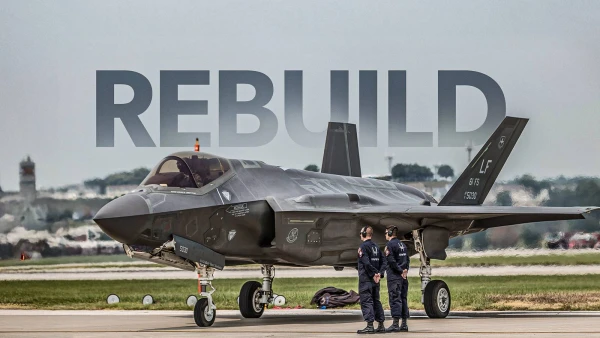
Tyndall Air Force Base, devastated by Hurricane Michael in 2018, is not only rebuilding but also modernizing its runways to support the Lockheed Martin F-35 Lightning II. The base, which received its first F-35 in 2023, is on track to host three full squadrons totaling over 70 jets by the end of the decade.
The runway refurbishment project includes upgrades to meet the F-35’s stringent operational needs, ensuring the base can handle the stealth fighter’s advanced takeoff and landing requirements. Tyndall’s transformation from a hurricane-ravaged facility to a cutting-edge F-35 hub underscores the Air Force’s commitment to resilience and modernization.
North Dakota’s Grand Forks AFB Repairs Aging Runway for Global Hawk Drones
Grand Forks Air Force Base, currently home to the 319th Reconnaissance Wing and its fleet of Northrop Grumman RQ-4B Global Hawk drones, is undergoing a $20.4 million runway repair project. The work involves milling and overlaying 10,270 feet of runway to address cracking and weathering, with drones temporarily relocated to Robins Air Force Base in Georgia during construction.
The upgrades are part of a broader effort to ensure the base can continue supporting high-altitude, long-endurance surveillance missions. The project is expected to take six months, with minimal disruption to the wing’s critical intelligence, surveillance, and reconnaissance (ISR) operations.
Mariana Islands’ North Field Revived for Future Military Training
In a striking departure from its past, North Field in the Mariana Islands—a relic of World War II—is being revitalized as a strategic military asset. The U.S. committed $500 million in 2024 to clear overgrowth and repave two of the airfield’s 7,874-foot runways, with initial flight operations resuming in May 2026.
Once abandoned in 1946, North Field now hosts joint-force training detachments, signaling a shift toward leveraging historic sites for modern military needs. The project, slated for completion by 2027, highlights the Air Force’s innovative approach to repurposing aging infrastructure for future challenges.
A Costly but Necessary Overhaul
The Air Force’s runway upgrades are a costly but essential investment in maintaining operational readiness. With Cold War-era airfields struggling to support next-generation aircraft, these projects ensure that the U.S. military remains prepared for an era of rapid technological advancement and geopolitical uncertainty. Yet, as the projects in Michigan and the Mariana Islands demonstrate, modernization comes with its own set of challenges—balancing military necessity with environmental stewardship and community concerns.