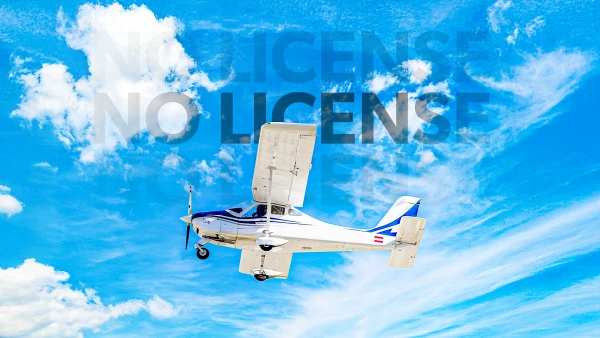
Obtaining a traditional pilot's license can be a costly and time-consuming endeavor, putting the dream of flight out of reach for many aviation enthusiasts. However, under specific regulatory frameworks, it is entirely possible to take to the skies in the United States without any formal pilot certificate, medical clearance, or aircraft registration.
Established in 1982, the Federal Aviation Administration's (FAA) Part 103 regulations carved out a unique exemption for "ultralight vehicles." The rationale behind the rule is straightforward: because these craft are exceptionally light and slow, they pose minimal kinetic risk to people and property on the ground, allowing operators to enjoy recreational flight largely free of government red tape.
Understanding Part 103 Ultralights
Under FAA rules, pilots operating vehicles classified strictly under Part 103 are not required to hold prior training or experience, though the agency strongly encourages proper instruction before flying. The classification depends entirely on the vehicle's weight and performance capabilities, regardless of whether it is marketed as a powered ultralight, hang glider, or hang balloon.
To qualify as an ultralight vehicle rather than a regulated aircraft, strict operational boundaries apply:
- Recreational Use Only: Ultralight operations are strictly limited to sport and recreation. Commercial use is prohibited.
- Daylight and Clear Weather: Flights must be conducted during daylight hours only, maintaining visual reference to the ground and clear weather conditions.
- Airspace Restrictions: Ultralights can fly freely in uncontrolled Class G airspace, but are banned from Class B, C, D, and surface-level Class E airspace without prior authorization.
- Crowd Avoidance: Pilots must steer clear of congested areas, stadiums, and gatherings of people, while always yielding the right-of-way to conventional aircraft.
Popular Ultralight Categories
Pilots looking to enter the hobby have several vehicle configurations to choose from. Powered Parachutes utilize wheeled carts suspended beneath large square parachute canopies, powered by small two-stroke or four-stroke engines to offer high stability and slow flight speeds. Meanwhile, Weight-Shift Control Trikes feature a minimalist hang-glider-style wing mounted over a lightweight three-wheeled carriage, steered by shifting the pilot's center of gravity.
Kits for compliant vehicles, such as the popular U-Fly-It Aerolite 103, are readily available on the market. Quick-build airframe kits can often be assembled by first-time builders in 30 to 40 hours, providing an accessible entry point into aviation.
International Rules Differ
While the FAA's approach allows for completely unlicensed flight within U.S. airspace, other nations take different regulatory paths. Most peer countries—including nations in Europe, Australia, and New Zealand—tend to be more restrictive by requiring basic pilot registration or training, though some permit two-seater configurations or utilize industry self-administration models rather than direct government oversight.