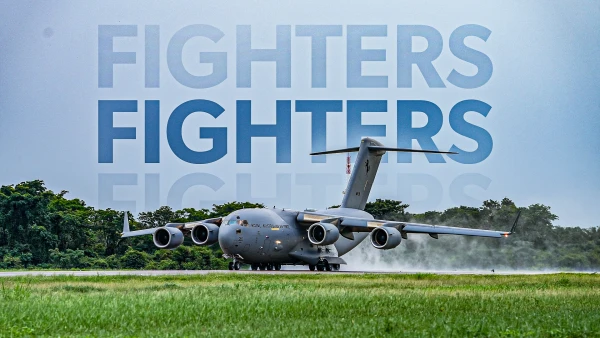
The United States Air Force is testing a new way to turn its heavy‑lift aircraft into long‑range strike platforms. The program, originally called Rapid Dragon and now dubbed “Dragon Cart,” uses specially‑designed pallets that can be loaded onto C‑130J Super Hercules and C‑17 Globemaster III transports and then released in flight to fire multiple cruise missiles.
Instead of funding brand‑new bombers, the service hopes to exploit the dozens of cargo planes already in service. By converting a portion of the air‑mobility fleet into missile carriers, commanders could gain a massive, inexpensive source of precision fire that can be employed on short notice.
The effort began in 2019 when the Air Force Research Laboratory ran a series of ground and flight tests. More than 30 stakeholders – ranging from major commands and test agencies to allied partners and industry – have since contributed to the design, modeling, and flight‑validation of the palletized launch system.
“Dragon Cart gives the Air Force a way to field hundreds of affordable, mass‑produced cruise missiles without pulling fighters or bombers off their primary missions.” – Air Force spokesperson
The concept addresses a growing demand for “affordable mass” munitions. During Operation Epic Fury, U.S. strike aircraft dropped roughly 1,100 Joint Air‑to‑Surface Standoff Missiles (JASSM) out of an inventory of about 4,400, underscoring the need for a larger, cheaper missile pool. The Air Force’s FY 2027 budget asks for $355 million to buy 1,000 weapons under the Future Affordable Munitions (FAMM) program, with a five‑year plan to acquire 28,000 missiles costing $12.6 billion.
Industry partner Anduril Industries has been tapped to produce its Barracuda cruise missile. The company aims to deliver its first missiles to the Pentagon in early 2027 and ramp up production to 5,300 units in 2028, climbing to 8,000 by 2031.
With 428 C‑130s and 222 C‑17s spread across active‑duty, Air National Guard, and Reserve units, the potential launch platform pool is sizable. Adversaries will soon have to consider that a seemingly ordinary cargo aircraft could be carrying a lethal payload, complicating their air‑defense planning.
Operationally, Dragon Cart could free up fighters and bombers for other missions while still providing rapid, precise strikes in support of ground forces. The palletized approach also allows the Air Force to mix and match missile types, adapting to different target sets without extensive air‑frame modifications.
However, several hurdles remain. Each aircraft‑missile combination must undergo rigorous testing and certification, and the service must maintain a robust missile stockpile to sustain continuous operations. Integration challenges and logistical support will determine how quickly the concept moves from demonstration to a routine part of the U.S. long‑range strike arsenal.
If successful, the Dragon Cart program could redefine the role of America’s cargo fleet, turning “transport” aircraft into flexible strike assets and reshaping the Air Force’s approach to high‑intensity conflict.