The world of trade apprenticeships is undergoing a significant transformation. With technology playing an increasingly prominent role, traditional skills are being combined with modern techniques to create a new generation of skilled craftsmen.
The rise of digital tools has led to a shift in the way apprentices are being taught, with many programs now incorporating technologies like computer-aided design (CAD), 3D printing, and CNC programming. This blend of old and new is enabling apprentices to develop a unique set of skills that set them apart from their peers.
For Ollie Priestley, a 29-year-old heritage vehicle technician apprentice, this means learning to restore modern classic cars using a combination of traditional and new techniques. 'I wanted to develop the skills that allowed me to work on the cars that I love and excite me,' he says. 'Getting to know how to make things keeps me focused and engaged.'
Chris Tolman, founder of specialist car restoration business Tolman, believes that this approach is essential for creating skilled technicians who can think creatively and innovate. 'The computer identifies the issue and they swap the part,' he says. 'For specialist car businesses, our technicians need to identify and understand a problem, and then be creative and innovative to find the answer.'
As apprenticeships evolve, there is a growing concern that the focus on technology may come at the expense of traditional skills. However, according to John Pitchforth, managing director of the Heritage Skills Academy, this is not necessarily the case. 'Our apprentices come out highly skilled - perhaps more so than those from other programmes,' he says.
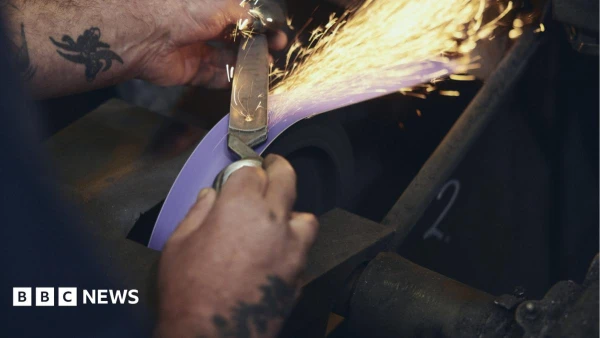
The integration of technology is not limited to the automotive industry. Companies like Ernest Wright, a scissor-maker based in Sheffield, are using 3D metal printing to create highly accurate prototypes and revive traditional products. For trainee Elliott Nurcombe, this has added an exciting element to his learning experience. 'Maintenance wise, a lot of the parts for our machines simply don't exist anymore, so using modern technologies like CAD and 3D printing, we've been able to replicate some,' he says.
As the landscape of trade apprenticeships continues to shift, it is clear that the key to success lies in finding a balance between traditional skills and modern technology. By combining the best of both worlds, apprentices can develop a unique set of skills that will serve them well in their chosen trade.