The sticker price of a Boeing 787-9 Dreamliner or an Airbus A350-900 might seem straightforward—$281.6 million for the Boeing and $317.4 million for the Airbus, according to their last published lists in 2018. But in the high-stakes world of commercial aviation, where every dollar counts, the real cost is far more elusive.
Airlines rarely pay the full list price. Discounts of 30% to 50% are common, and in some cases, deals can dip below 45% of the catalog value. The discrepancy stems from a complex dance of supply, demand, and negotiation power. A new aircraft program might see buyers paying close to 80% of a lower list price, while mature programs often settle around 50% to 55%. For "white tail" jets—aircraft built for customers who never took delivery—the price can plummet to 45% or less.
Take Hawaiian Airlines, which ordered 10 Boeing 787-9s in 2018. Boeing touted the deal at $282 million per jet, but industry estimates suggested the real cost was closer to $150 million, roughly 53% of the list price. Lufthansa, a rare buyer of both jets, reportedly secured its 787-9s for about $145 million each in 2021, though the airline has not disclosed the exact figure for its Airbus A350-900s.
The price gap isn’t just about raw numbers—it’s about what those numbers represent. The Airbus A350-900 is larger, with a higher capacity, which can dilute its per-seat operating costs. The Boeing 787-9, while lighter, offers lower hourly operating expenses. Airlines like Lufthansa, which ordered 10 of each, seem to see little difference in value, suggesting the market has no clear winner.
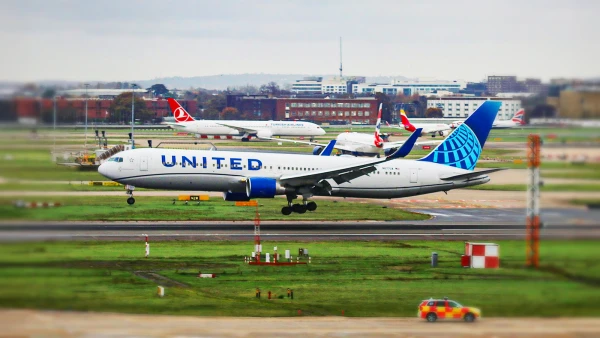
Yet the comparison is fraught with uncertainty. List prices from 2018 may no longer reflect reality, and net prices are closely guarded secrets. Even the operating cost figures are averages that can shift dramatically based on cabin configurations. United Airlines’ "Elevated" 787-9s, for example, feature just 222 seats—far fewer than the typical 250 to 325—skewing per-seat economics.
"The true price gap could be narrower than the list difference, or wider. Nobody outside the contracts can say."
Timing also plays a critical role. Airlines placing orders for delivery slots as far out as 2032 are paying for certainty as much as hardware. A bargain price on an aircraft you can’t fly for eight years may not be the steal it appears.
So, which jet offers the better value? It depends. If an airline can fill the Airbus A350-900’s larger cabin, the per-seat cost advantage may tip the scales. If the focus is on hourly efficiency, the Boeing 787-9 could be the smarter bet. But in the end, the real cost is whatever the airlines and manufacturers agree behind closed doors—far from the public eye.