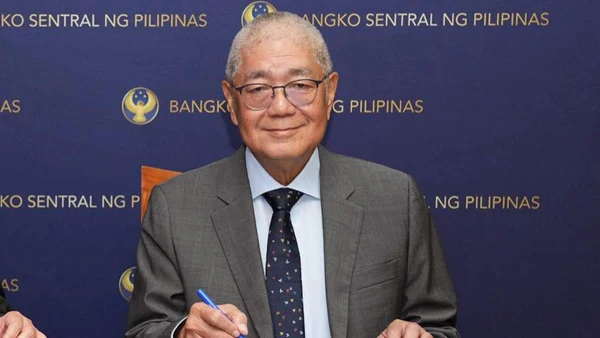
For the first time in more than two years, the Bangko Sentral ng Pilipinas (BSP) raised its benchmark interest rate on Thursday, responding to a fresh surge in inflation fueled by oil price shocks linked to the Middle East war.
The Monetary Board, the top policymaking body of the BSP, lifted the benchmark rate guiding bank lending costs by a quarter point to 4.5 percent.
This marked the first rate hike since October 2023, back when the BSP had delivered an urgent tightening move to choke off rapid inflation.
"I think it's fairly safe to say [the easing cycle] is over," BSP Governor Eli Remolona Jr. told a news conference.
Preemptive move
Explaining what it described as a "preemptive" decision, the BSP said its inflation outlook has "deteriorated" as the US-Israel war on Iran stretched into its eighth week.
Policymakers said inflation may average 6.3 percent this year and 4.3 percent in 2027—breaching the central bank's 2-percent to 4-percent target range.
"Higher global oil and fertilizer prices have begun feeding through to domestic fuel and food prices," the BSP said. "At the same time, core inflation has continued to rise, pointing to a broadening of underlying price pressures."
The step places the Philippines among the first in Asia to raise rates in response to the latest global oil shock.
It follows last week's move by the Monetary Authority of Singapore, which tightened policy ahead of its regional peers. Meanwhile, Bank Indonesia opted on April 22 to keep its rates unchanged.
'Good consensus'
Remolona said the decision was not unanimous but reflected a "good consensus."
Policymakers also considered scenarios that could have warranted a jumbo half-point increase, but Remolona said the board ultimately judged a smaller move to be "the most reasonable scenario."
"We usually want to keep it steady if the data can support it," he said. "But for now, the way we look at the data, it suggests that the easing cycle is over, and we won't make very large moves."
Higher borrowing costs are intended to prompt households to rein in spending, easing demand-driven price pressures but also cooling economic activity.
However, the Philippines—the first country to declare a national energy emergency amid Middle East turmoil—is grappling with supply-driven inflation. The central bank has acknowledged that such challenges are not best addressed through rate hikes, which could also delay economic recovery from a confidence shock.
Already, inflation rose to a near two-year high of 4.1 percent in March, edging past the central bank's target range. The latest move, Remolona said, is intended to prevent spillover effects from supply shocks into broader price pressures.