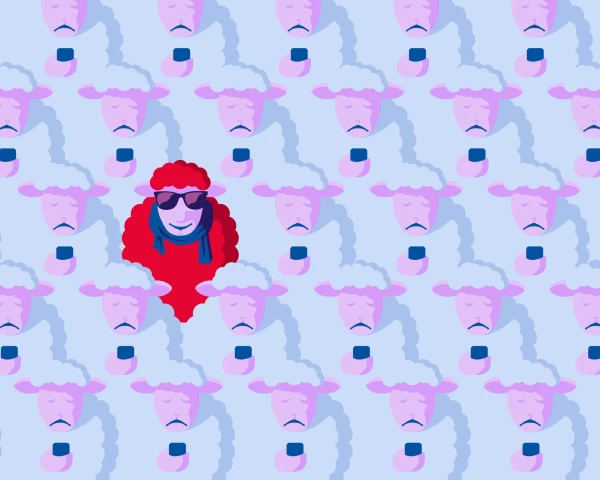
Have you found it harder in recent years to answer simple questions like "What music do you like?" or "What clothes are your style?" If so, you're not alone. The internet, and particularly algorithmic feeds on streaming and social media platforms, has fundamentally eroded our ability to form genuine personal preferences. We no longer choose what to consume; we are fed a curated stream of content designed to keep us scrolling, based on data from our past behaviors. This has led to a homogenization of taste, where trends spread instantly and feel inescapable.
In his book Filterworld, Kyle Chayka argues that algorithms promote the most "accessible" and "ambient" content, which often means the least meaningful. After years of this, many report feeling numb and disconnected from their own desires. To explore this phenomenon, I visited Portobello Road market in London, where I used to hunt for unique vintage clothes as a teen. While the market itself felt unchanged, traders and shoppers described a growing herd mentality. Kerry, a vintage seller, noted younger customers "wanting to fit in" rather than stand out. Helena, a 25-year-old stylist, lamented how microtrends dominate, saying, "I'm like, have I been influenced, or is this actually me?"
Ione Gamble, founder of Polyester magazine, has long examined taste. She observes that algorithms "make us all feel powerless" because we no longer have the time or space to train our own taste. Her essay collection The Polyester Book of (Bad) Taste features a chapter by novelist Nicola Dinan, who describes feeling like "a driverless car" in cultural consumption.
Two pop culture moments this year highlight a growing backlash. The rise of Carolyn Bessette Kennedy as a fashion icon, spurred by the TV series Love Story, has led to homogenization—retailers like Marks & Spencer selling "90s edits" based on her look, complete with shopping lists. This echoes the past, but with algorithmic amplification, our choices feel more prescribed than ever. The question remains: can we reclaim our personal taste in a world designed to influence it?