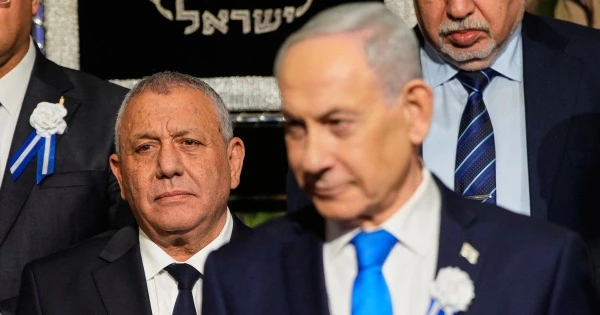
Prime Minister Benjamin Netanyahu’s bid to form a new unity government in Israel has hit a critical impasse, as negotiations with opposition leader Benny Gantz collapse over a disputed power-sharing rotation deal. With the deadline looming, the political standoff threatens to plunge the country into further instability just months after a fragile ceasefire in Gaza.
"This isn’t just about who sits in the chair—it’s about whether Israel can govern itself at a time when it faces immense challenges." — Benny Gantz, Opposition Leader
Netanyahu had hoped to secure Gantz’s Israel Resilience Party as a stabilizing force in his government, offering a rotation agreement where each would serve as prime minister for 18 months. But the deal collapsed after Gantz demanded stricter terms on security policy and judicial reforms, areas where Netanyahu’s government has faced widespread criticism.
The failure to reach an accord has left Israel in uncharted territory. Without a functioning coalition, critical legislation—including budgets and defense policies—could stall, exacerbating the country’s economic and social tensions. Opposition figures have already begun calling for Netanyahu’s resignation, while his allies accuse Gantz of undermining national unity.
Analysts suggest the deadlock may force Israel to hold new elections, a prospect that could deepen divisions in a society already split over the war and domestic policies. The political vacuum also risks emboldening Israel’s adversaries, including Hamas and Hezbollah, who may exploit the uncertainty to escalate tensions.
For now, Netanyahu remains in power as caretaker prime minister, but his ability to govern is severely constrained. The coming days will determine whether Israel can break the deadlock—or whether the country’s political crisis will spiral further out of control.